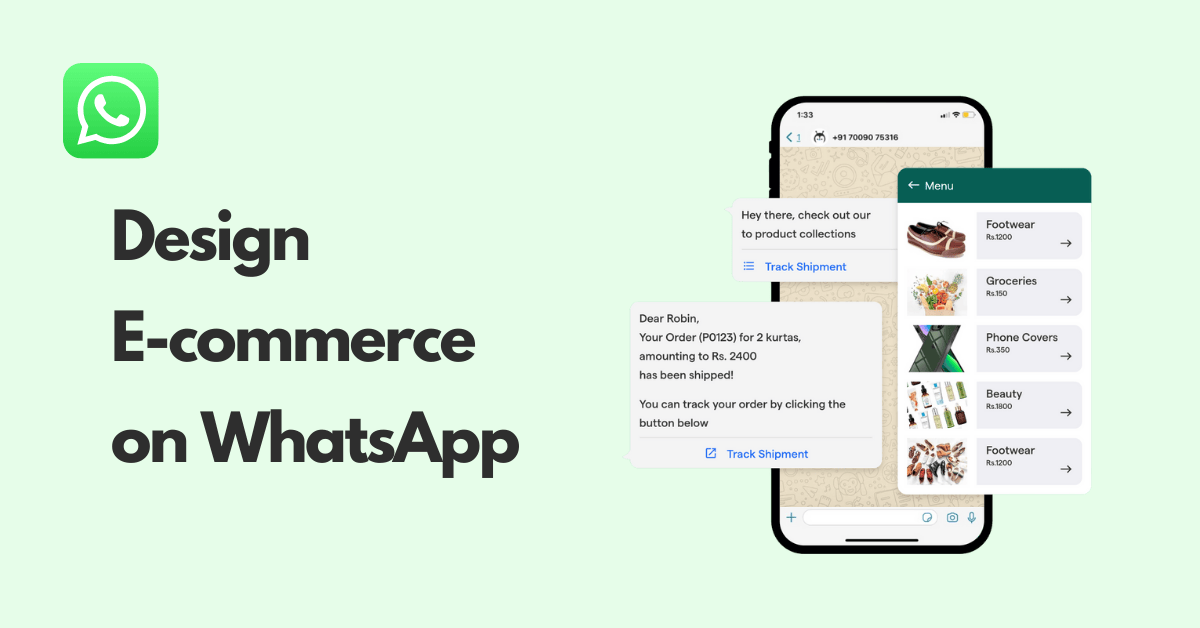
Introduction
Looking at the challenge of adding e-commerce functionality to WhatsApp, I see a significant opportunity to leverage the platform's massive user base and high engagement for commerce. I'll approach this by understanding the market opportunity, identifying key user segments, analyzing pain points, and developing a strategic solution that aligns with WhatsApp's core values of simplicity and privacy.
Does this approach sound good? I'd like to make sure we're aligned before diving deeper.
Step 1
Clarifying Questions (3 minutes)
- Why it matters: This helps define the scope and ambition of our solution.
- Expected answer: Enhancing with specific features rather than building a full platform.
- Impact on approach: A focused enhancement would leverage WhatsApp's strengths rather than competing directly with dedicated e-commerce platforms.
- Why it matters: Different objectives would lead to different prioritization decisions.
- Expected answer: Likely a combination, with emphasis on engagement and ecosystem expansion.
- Impact on approach: Would determine whether we optimize for transaction volume, user retention, or merchant adoption.
- Why it matters: Different markets have vastly different e-commerce maturity and WhatsApp usage patterns.
- Expected answer: Focus on emerging markets where WhatsApp is already used informally for business.
- Impact on approach: Would influence feature prioritization and go-to-market strategy.
- Why it matters: Any solution must align with WhatsApp's core values and parent company objectives.
- Expected answer: Solutions must maintain end-to-end encryption and align with Meta's commerce strategy.
- Impact on approach: Would limit certain data collection and personalization options common in e-commerce.
Propose the Goal
Given WhatsApp's focus on connecting people and businesses in a seamless, private way, I believe our goal should be to enable frictionless commerce experiences that maintain the app's simplicity while creating value for users, businesses, and WhatsApp itself. Does this align with your vision?
Define the Scope
For this discussion, I'll focus on enhancing WhatsApp with e-commerce capabilities that serve both small businesses and consumers, particularly in high-adoption markets. I'll assume we're working within WhatsApp's existing infrastructure and privacy framework, with the ability to integrate with Meta's broader commerce ecosystem.
Let me take a moment to organize my thoughts before continuing.
Based on our discussion, I'll assume we're looking to enhance WhatsApp with targeted e-commerce functionality rather than building a comprehensive platform, with a focus on emerging markets where WhatsApp already has strong penetration, while maintaining the app's privacy-first approach.
Step 2
Why build this? (5 minutes)
Analyze Macro Trends and Opportunities:
The e-commerce landscape is evolving rapidly with several key trends that make this initiative timely:
- Conversational Commerce Growth: Globally, we're seeing 25-30% annual growth in commerce conducted through messaging apps, with Asia leading this trend.
- Mobile-First Shopping: Over 70% of e-commerce traffic now comes from mobile devices, with users preferring seamless, app-based experiences.
- Social Commerce Explosion: Social commerce is projected to reach $1.2 trillion by 2025, growing three times faster than traditional e-commerce.
- Micro and Small Business Digitization: Post-pandemic, there's been a 40% increase in small businesses seeking digital sales channels with minimal technical barriers.
WhatsApp is uniquely positioned to capitalize on these trends with its 2+ billion users and high daily engagement rates.
Competitor Analysis:
Several messaging platforms have already moved into e-commerce:
- WeChat: The gold standard in conversational commerce, with comprehensive payment, shopping, and service booking features integrated seamlessly. Their mini-programs ecosystem generates billions in transactions annually.
- Line: Has successfully integrated shopping, payment, and delivery services in Southeast Asia, with 80+ million monthly active shoppers.
- Telegram: Recently added payment capabilities and basic storefronts, though with limited adoption so far.
- Facebook Messenger: Has shopping capabilities but hasn't achieved the same penetration as WhatsApp in key emerging markets.
WhatsApp's strengths include its massive user base, high trust factor, and simplicity. Its weaknesses are the current limited business tools and lack of native payment infrastructure in many markets.
Value Chain Analysis:
In the e-commerce value chain, several areas remain underserved, particularly for small merchants:
- Discovery: Small businesses struggle with visibility without expensive ads
- Conversion: Complex checkout processes lead to cart abandonment
- Customer Service: Post-purchase support is often fragmented across platforms
- Repeat Business: Maintaining customer relationships is challenging without dedicated tools
WhatsApp can address these gaps by creating an integrated experience that simplifies the entire commerce journey while leveraging its core strength in communication.
Step 3
User Segments (5 minutes)
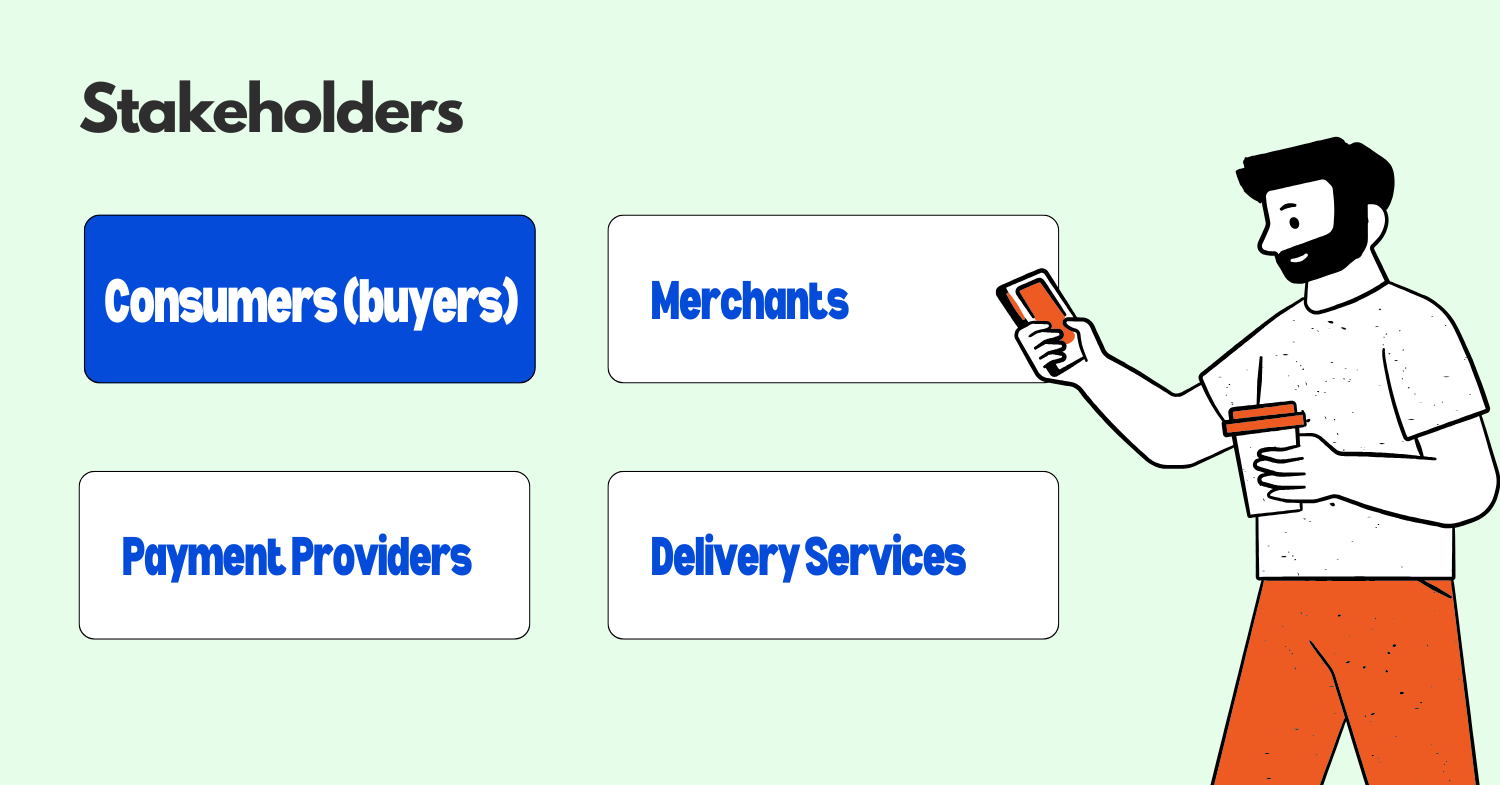 The WhatsApp e-commerce ecosystem involves several key stakeholders:
- Consumers (buyers)
- Merchants (sellers)
- Payment providers
- Delivery services
- WhatsApp/Meta (platform)
Since we're approaching this as a WhatsApp PM, I'll focus primarily on merchants and consumers as our direct users.
Merchant Segments:
- Micro-entrepreneurs: Individual sellers with no formal business structure (e.g., home bakers, craftspeople)
- Small retail businesses: Local shops looking to expand their digital presence (e.g., neighborhood grocery stores)
- Medium-sized businesses: Established companies seeking additional sales channels (e.g., regional clothing brands)
- Large enterprises: Major brands wanting to leverage WhatsApp for customer engagement and sales (e.g., national retailers)
Consumer Segments:
- Convenience Seekers: Value speed and simplicity over price, willing to pay premium for seamless experience
- Relationship Buyers: Prefer buying from people/businesses they know and trust
- Deal Hunters: Price-sensitive shoppers looking for the best offers
- Digital Natives: Young users who expect integrated digital experiences across all aspects of life
Let's prioritize these segments:
| Segment | TAM (1-10) | Engagement Potential (1-10) | Monetization Potential (1-10) | Total Score |
|---|---|---|---|---|
| Micro-entrepreneurs | 9 | 10 | 6 | 540 |
| Small retail businesses | 8 | 9 | 8 | 576 |
| Medium-sized businesses | 6 | 7 | 9 | 378 |
| Large enterprises | 4 | 5 | 10 | 200 |
For small retail businesses, the score is high because:
- TAM (8): Millions of small retailers globally use WhatsApp informally
- Engagement (9): They're already active on WhatsApp and eager for better tools
- Monetization (8): Willing to pay for features that drive business growth
For consumers, I'll focus on Relationship Buyers as they align best with WhatsApp's strengths:
| Segment | TAM (1-10) | Engagement Potential (1-10) | Monetization Potential (1-10) | Total Score |
|---|---|---|---|---|
| Convenience Seekers | 7 | 8 | 7 | 392 |
| Relationship Buyers | 9 | 9 | 7 | 567 |
| Deal Hunters | 8 | 6 | 5 | 240 |
| Digital Natives | 7 | 7 | 6 | 294 |
Based on this analysis, I'll focus on Small Retail Businesses and Relationship Buyers as our primary segments. These groups have natural alignment - small businesses thrive on personal relationships, and relationship buyers prefer purchasing from businesses they know and trust.
Step 4
Pain Points (5 minutes)
For Small Retail Businesses using WhatsApp for commerce, key pain points include:
-
Manual Order Management Small businesses currently manage orders through WhatsApp conversations manually, leading to errors and inefficiency. "I spend hours scrolling through chats to find orders and manually tracking what's been paid for." - Hypothetical shop owner Potential metrics: Time spent per order, error rate in order fulfillment
-
Payment Friction Businesses must direct customers to external payment methods, causing drop-offs and confusion. "About 30% of my customers abandon purchases when I ask them to pay through a separate app." - Hypothetical boutique owner Potential metrics: Conversion rate, payment completion time
-
Inventory Management No way to sync available inventory with what's being offered through WhatsApp. "I've had to apologize to customers multiple times when I realize I've sold something that's out of stock." - Hypothetical retailer Potential metrics: Oversell incidents, customer complaints
-
Limited Product Showcase Difficult to display products effectively within WhatsApp's current format. "Sending individual photos with descriptions for each product is tedious, and customers can't easily browse what I offer." - Hypothetical seller Potential metrics: Time to showcase full inventory, customer engagement with product images
For Relationship Buyers using WhatsApp for purchases:
-
Trust and Verification Difficulty distinguishing legitimate businesses from scammers. "I only buy from businesses my friends have used before because I'm worried about sending money to someone I don't know." - Hypothetical consumer Potential metrics: Purchase hesitation rate, verification checks before purchase
-
Fragmented Shopping Experience Need to switch between apps for browsing, communicating, and paying. "I like talking to the shop owner on WhatsApp, but having to go to their website, then back to WhatsApp, then to a payment app is frustrating." - Hypothetical buyer Potential metrics: App switching frequency, purchase completion time
-
Order Tracking Uncertainty No standardized way to track order status within WhatsApp. "After I pay, I'm constantly messaging the seller asking 'has it shipped yet?' because there's no other way to know." - Hypothetical customer Potential metrics: Follow-up message frequency, time spent checking order status
Step 5
Prioritization of Pain Points (3 minutes)
Let's prioritize these pain points based on severity (impact on user experience) and frequency (how often users encounter them):
| Pain Point | Severity (1-10) | Frequency (1-10) | Score |
|---|---|---|---|
| Manual Order Management | 8 | 10 | 80 |
| Payment Friction | 9 | 9 | 81 |
| Inventory Management | 7 | 8 | 56 |
| Limited Product Showcase | 6 | 10 | 60 |
| Trust and Verification | 9 | 7 | 63 |
| Fragmented Shopping Experience | 8 | 10 | 80 |
| Order Tracking Uncertainty | 7 | 9 | 63 |
Based on this analysis, the top pain points to address are:
- Payment Friction (Score: 81)
- Manual Order Management and Fragmented Shopping Experience (tied at 80)
I'm prioritizing Payment Friction as the #1 pain point because:
- It directly impacts conversion rates and revenue for businesses
- It's a major source of customer abandonment
- It affects both merchants and consumers equally
- Solving this creates immediate, measurable value
- It's a prerequisite for addressing other pain points effectively
The Fragmented Shopping Experience and Manual Order Management are closely related and would likely be addressed together in a comprehensive solution. By focusing on these top pain points, we can create a solution that delivers significant value to both our key user segments while setting the foundation for addressing the remaining pain points in future iterations.
Now that we've identified the key pain points, let me organize my thoughts before developing solutions.
Step 6
Solution (10 minutes)
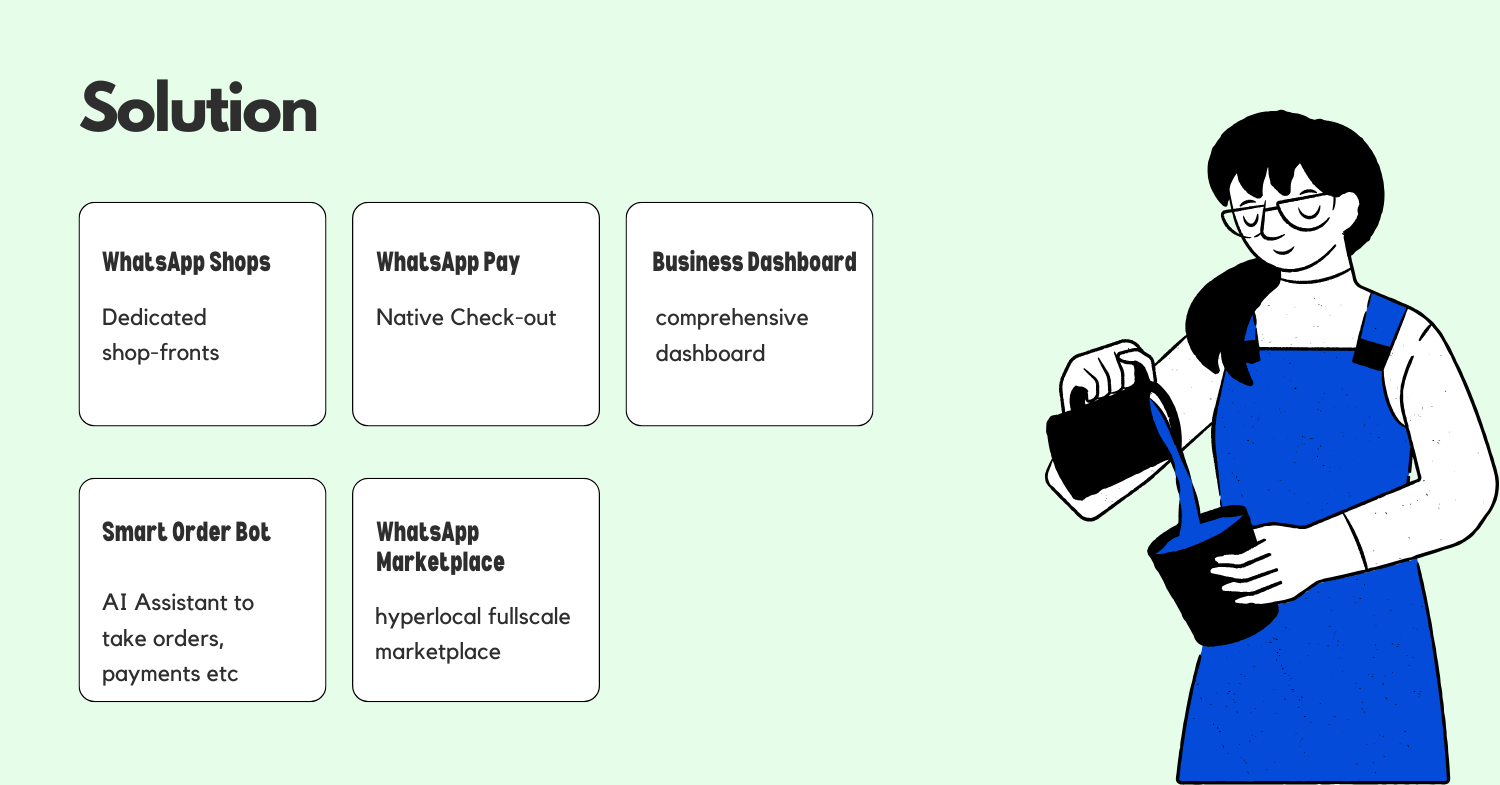 Based on our analysis, I've developed several potential solutions to address the prioritized pain points:
1. WhatsApp Shops
Create dedicated storefronts within WhatsApp where businesses can showcase products, manage inventory, and process orders all in one place. This would include a visual catalog, automated order management, and integration with WhatsApp's existing business tools.
2. WhatsApp Pay & Checkout
Expand WhatsApp's payment capabilities to include a complete checkout experience with order summaries, payment processing, and digital receipts. This would eliminate the need to leave the app for payment and provide a seamless transaction experience.
3. Business Dashboard
Develop a comprehensive dashboard for merchants to manage all aspects of their WhatsApp commerce activities, including inventory, orders, customer communications, and analytics. This would streamline operations and reduce manual work.
4. Smart Order Bot
Create an AI-powered assistant that helps businesses automate order taking, payment collection, and basic customer service within their existing WhatsApp Business accounts. This would be less disruptive to current workflows while still addressing key pain points.
5. Moonshot: WhatsApp Marketplace
Build a full marketplace ecosystem within WhatsApp where users can discover new businesses, shop across multiple merchants, and manage all their purchases in one place. This would transform WhatsApp from a communication tool with commerce features to a comprehensive commerce platform.
Let's prioritize these solutions:
| Solution | Reach (1-10) | Impact (1-10) | Effort (1-10) | Alignment (1-10) | Score (R×I×A/E) |
|---|---|---|---|---|---|
| WhatsApp Shops | 9 | 8 | 7 | 9 | 9.3 |
| WhatsApp Pay & Checkout | 10 | 9 | 8 | 10 | 11.3 |
| Business Dashboard | 7 | 8 | 6 | 8 | 7.5 |
| Smart Order Bot | 8 | 7 | 5 | 7 | 7.8 |
| WhatsApp Marketplace | 10 | 10 | 10 | 6 | 6.0 |
WhatsApp Pay & Checkout scores highest because:
- Reach (10): Affects virtually all commerce transactions on the platform
- Impact (9): Directly addresses our top pain point
- Effort (8): Significant but leverages existing payment infrastructure in some markets
- Alignment (10): Perfectly aligns with goal of frictionless commerce while maintaining simplicity
Based on this analysis, I recommend pursuing WhatsApp Pay & Checkout as our primary solution, with WhatsApp Shops as a complementary feature to address the product showcase pain point.
User Flow for WhatsApp Pay & Checkout
This solution addresses our key pain points by:
- Eliminating payment friction with in-app checkout
- Reducing manual order management through automated order creation and tracking
- Creating a cohesive experience that doesn't require app switching
Technical and Business Challenges:
-
Regulatory Compliance: Payment processing requires navigating complex financial regulations across different markets. We would need to phase rollout based on regulatory readiness.
-
Integration Complexity: Creating seamless connections between WhatsApp's messaging infrastructure and payment systems while maintaining end-to-end encryption presents significant technical challenges.
-
Business Model Considerations: Determining the right fee structure that encourages adoption while generating sustainable revenue requires careful market testing and analysis.
Moonshot Idea: WhatsApp Commerce Graph
Beyond our immediate solution, I envision building a "Commerce Graph" that maps relationships between users, businesses, and products within WhatsApp. This would enable personalized discovery while respecting privacy, creating a unique commerce ecosystem that leverages WhatsApp's social nature. The system would use encrypted preference signals rather than invasive tracking to match users with relevant businesses and products.
Step 7
Success Metrics (5 minutes)
To evaluate the effectiveness of our WhatsApp Pay & Checkout solution, I would track the following metrics:
User Metrics:
-
Conversion Rate: Percentage of product inquiries that result in completed purchases. Target: 30% improvement over baseline.
- Leading indicator: Click-through rate on checkout buttons
-
Time to Purchase: Average time from initial product inquiry to completed transaction. Target: 50% reduction.
- Leading indicator: Reduction in message exchanges before payment
-
Repeat Purchase Rate: Percentage of customers who make additional purchases from the same business. Target: 25% increase.
- Leading indicator: Saved payment method usage
Product Metrics:
-
Transaction Volume: Number and value of transactions processed through WhatsApp Pay & Checkout. Target: 100M transactions in first year.
- Leading indicator: Weekly growth rate in early adopter markets
-
Merchant Adoption: Percentage of eligible businesses using the checkout feature. Target: 40% adoption within 12 months.
- Leading indicator: Feature activation rate after announcement
-
Error Rate: Percentage of transactions that fail or require customer support. Target: <2% error rate.
- Leading indicator: Successful test transactions during beta
-
User Satisfaction: Net Promoter Score for both merchants and customers using the feature. Target: NPS >50.
- Leading indicator: Sentiment in feedback during limited rollout
These metrics align with our goal of creating frictionless commerce experiences by measuring both the efficiency of the transaction process and its impact on business outcomes. The conversion rate and transaction volume directly address our payment friction pain point, while time to purchase measures improvements in the fragmented shopping experience.
Summary
To enhance WhatsApp with e-commerce functionality, I've proposed focusing on small retail businesses and relationship-oriented consumers as our primary user segments. The key pain points we identified were payment friction, manual order management, and fragmented shopping experiences.
Our prioritized solution is WhatsApp Pay & Checkout, which creates an integrated payment and order management system directly within WhatsApp conversations. This addresses our top pain points while maintaining WhatsApp's core values of simplicity and privacy.
Success will be measured through improved conversion rates, reduced purchase time, and increased transaction volume. This approach leverages WhatsApp's massive user base and high engagement while creating new revenue opportunities through transaction fees.
The next steps would be to:
- Develop a detailed product specification for WhatsApp Pay & Checkout
- Identify 2-3 test markets for initial rollout based on regulatory readiness
- Create an adoption strategy for merchants, including education and incentives
- Design a phased rollout plan that builds on early successes
.png)