Introduction
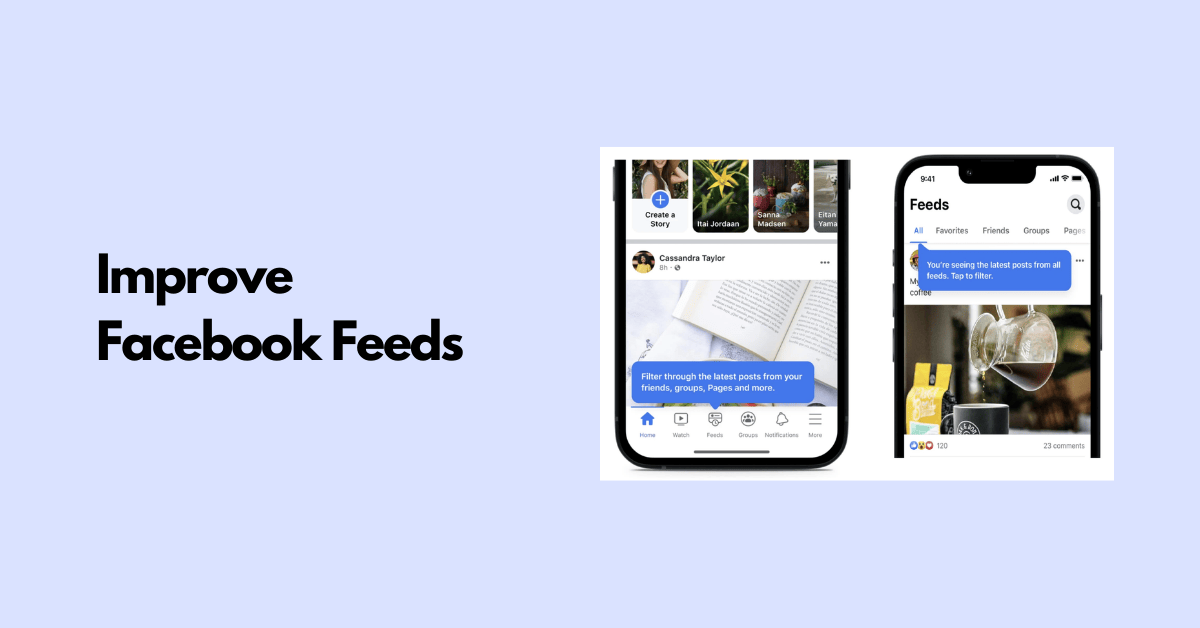
Facebook is used by approximately 2 billion users daily and the Feed is the core experience of Facebook, serving billions of users daily with personalized content. I'll approach improving the Facebook Feed by examining its current state, identifying key pain points, and developing strategic solutions that enhance user engagement while supporting business objectives.
Step 1
Clarifying Questions (5 mins)
- Why it matters: This fundamentally shapes our approach—whether we're optimizing for engagement, satisfaction, revenue, or solving specific problems.
- Expected answer: Likely a balance of engagement and quality, with concerns about declining engagement among certain user segments.
- Impact on approach: If engagement is primary, I'd focus on algorithmic improvements and interaction features; if quality is key, I'd emphasize content filtering and discovery mechanisms.
- Why it matters: Different user segments have vastly different needs and behaviors with the Feed.
- Expected answer: Likely concern about younger users and maintaining engagement with core users who drive platform value.
- Impact on approach: Would tailor solutions to specific segment needs rather than one-size-fits-all improvements.
- Why it matters: Helps identify where Facebook Feed might be falling behind in meeting evolving user expectations.
- Expected answer: Likely concerns about TikTok's algorithm efficiency and Instagram's visual engagement.
- Impact on approach: Would focus on incorporating successful elements from competitors while maintaining Facebook's unique value proposition.
I'd like to take a minute to organize my thoughts before diving into user segmentation.
Step 2
User Segmentation (5 mins)
Key Stakeholders
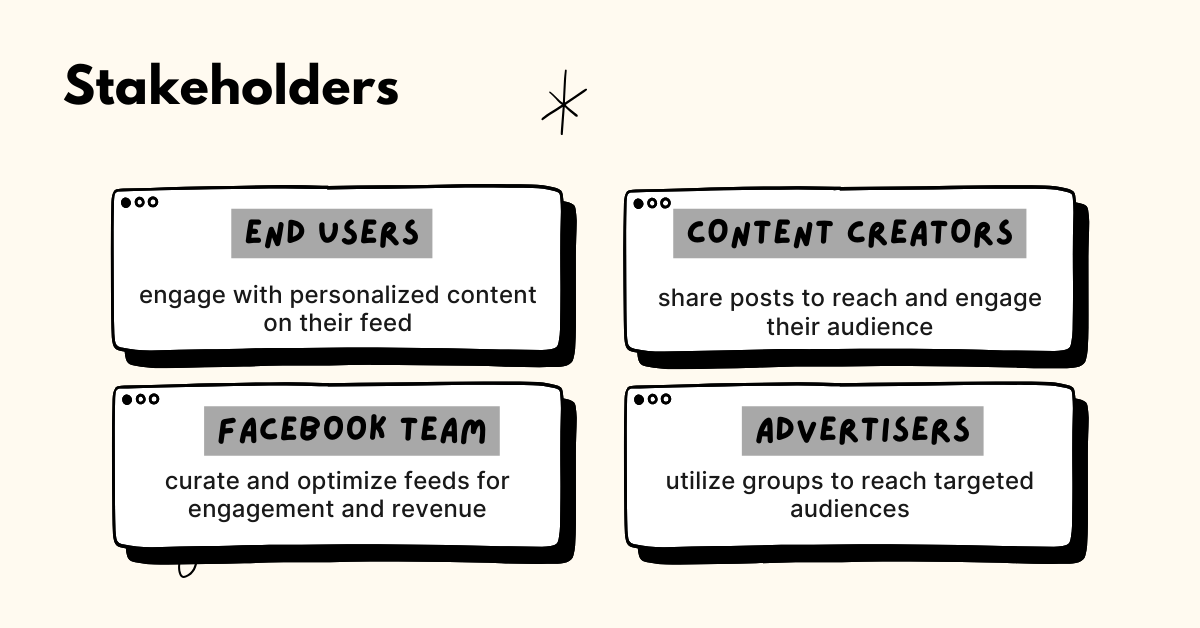
The Facebook Feed ecosystem involves several key stakeholders:
- End Users - People who consume and interact with content
- Content Creators - Individuals and organizations who post content
- Advertisers - Businesses paying to reach users through the Feed
- Platform (Facebook) - The company managing the ecosystem
I'll focus primarily on End Users since they're the primary consumers of the Feed experience, and their engagement directly impacts all other stakeholders. Without strong user engagement, content creators lose audience, advertisers lose reach, and the platform loses value.
Sub-segments
Within the End Users stakeholder group, I see several behavioral sub-segments:
- Active Socializers - Users who primarily use Facebook to connect with friends and family, share personal updates, and engage with their immediate social circle's content
- Content Consumers - Users who mainly scroll through Feed to consume entertaining or informative content without necessarily creating much content themselves
- Community Participants - Users who are highly engaged with groups and community features, using Facebook primarily for interest-based connections
- Passive Browsers - Users who check Facebook occasionally but spend limited time and have minimal engagement
Prioritization Table
| Sub-Segment | TAM (1-10) | Frequency (1-10) | Engagement Potential (1-10) | Total Score | Explanation |
|---|---|---|---|---|---|
| Active Socializers | 7 | 9 | 9 | 567 | High frequency of visits and strong engagement with core social features |
| Content Consumers | 9 | 8 | 7 | 504 | Largest segment with good visit frequency but moderate engagement |
| Community Participants | 6 | 9 | 10 | 540 | Highest engagement per session but smaller overall population |
| Passive Browsers | 8 | 4 | 3 | 96 | Large segment but low frequency and minimal engagement |
Based on this analysis, I'll focus on Active Socializers as they represent the core value proposition of Facebook and have the highest combined score of TAM, frequency, and engagement potential.
Primary Persona: Active Socializer
Name: Sarah, 32 Demographics: Urban professional, married with young children Behaviors:
- Checks Facebook 5-8 times daily, primarily on mobile
- Shares personal updates and family photos weekly
- Comments on friends' posts regularly
- Uses Messenger integrated with Feed experience
- Participates in several family and neighborhood groups
Motivations:
- Staying connected with friends and family, especially those geographically distant
- Documenting and sharing life moments
- Maintaining awareness of friends' life events
- Finding relevant local information and recommendations
Pain Points:
- Feels Feed shows too much content from pages and strangers versus friends
- Misses important updates from close connections
- Experiences content overload with too many ads and suggested posts
- Finds it difficult to control what appears in her Feed
- Concerned about privacy and who sees her interactions
Step 3
Pain Points Analysis (10 mins)
User Journey for Active Socializers
- Opening the App - User launches Facebook, expecting to see updates from friends and family
- Initial Feed Scan - Quick scroll through first 5-10 posts to see what's new
- Content Interaction - Engaging with posts through reactions, comments, or shares
- Content Creation - Posting own updates, photos, or thoughts
- Deep Browsing - Continuing to scroll for additional content
- Notification Check - Reviewing and responding to notifications
- Group Interaction - Visiting and engaging with group content
- Closing the App - Exiting after content consumption or when interrupted
Pain Points at Each Stage
-
Opening the App
- Pain Point: App load time can be slow on older devices or poor connections
- User Quote: "Sometimes I open Facebook and it takes forever to load, so I just switch to Instagram instead."
- Root Cause: Heavy client-side processing and large initial data payload
-
Initial Feed Scan
- Pain Point: Too many ads and suggested content before seeing friends' updates
- User Quote: "I have to scroll through five sponsored posts before I see anything from people I care about."
- Root Cause: Monetization priorities competing with user experience goals
-
Content Interaction
- Pain Point: Limited interaction options that don't capture nuanced responses
- User Quote: "Sometimes I want to show support without a full 'like' but there's no good option."
- Root Cause: Standardized reaction system that doesn't accommodate all emotional responses
-
Content Creation
- Pain Point: Uncertainty about who will see posted content
- User Quote: "I never know if my posts are actually reaching my friends or just disappearing into the void."
- Root Cause: Opaque algorithm and distribution system
-
Deep Browsing
- Pain Point: Content repetition and diminishing relevance the longer you scroll
- User Quote: "After a few minutes, I start seeing the same posts again or really old content."
- Root Cause: Limited fresh content from user's network and algorithm optimization issues
-
Notification Check
- Pain Point: Notifications often lead to content that's no longer relevant
- User Quote: "I'll get a notification about a comment, but when I click it, I can't find what I'm supposed to be looking at."
- Root Cause: Delayed notifications and poor deep linking
-
Group Interaction
- Pain Point: Important group content gets lost in the main Feed
- User Quote: "I miss announcements from my neighborhood group because they never show up in my main Feed."
- Root Cause: Algorithm undervaluing group content relative to viral or sponsored content
-
Closing the App
- Pain Point: Difficulty finding where you left off when returning
- User Quote: "When I come back to Facebook later, I have to scroll through all the same content again."
- Root Cause: Poor session persistence and content position memory
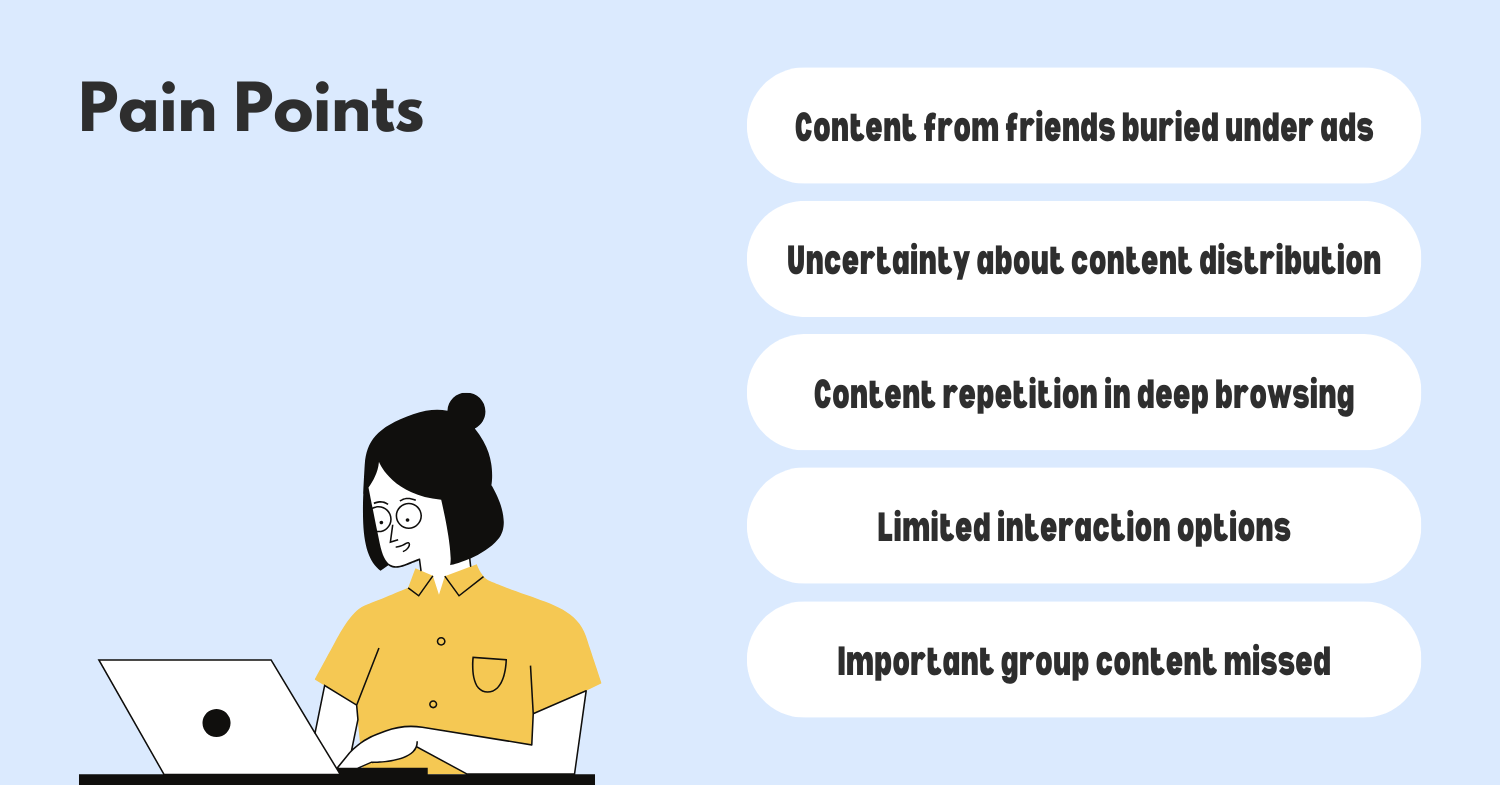
Pain Point Prioritization
| Pain Point | Severity (1-10) | Frequency (1-10) | Total Score | Explanation |
|---|---|---|---|---|
| Content from friends buried under ads/suggested content | 9 | 10 | 90 | Directly undermines core value proposition of connecting with friends |
| Uncertainty about content distribution | 8 | 7 | 56 | Creates hesitation in sharing and reduces content creation |
| Content repetition in deep browsing | 7 | 8 | 56 | Reduces session length and return frequency |
| Important group content missed | 8 | 6 | 48 | Undermines community value and causes users to miss relevant information |
| Limited interaction options | 6 | 9 | 54 | Reduces engagement quality but not a complete blocker |
| Poor session persistence | 7 | 6 | 42 | Creates friction but users have adapted |
| Slow app loading | 8 | 5 | 40 | Severe when it happens but not universal |
| Irrelevant notifications | 6 | 6 | 36 | Annoying but not critical to core experience |
Critical Pain Points
Based on this analysis, I'll focus on these top pain points:
-
Content from friends buried under ads/suggested content (Score: 90)
- This directly undermines Facebook's core value proposition for Active Socializers
- Has increased significantly as monetization pressure has grown
- Creates immediate dissatisfaction in the first moments of the user experience
-
Uncertainty about content distribution (Score: 56)
- Reduces content creation, which is essential for platform health
- Creates trust issues between users and platform
- Has worsened as algorithm complexity has increased
-
Content repetition in deep browsing (Score: 56)
- Directly impacts session length and return frequency
- Creates perception that "there's nothing new on Facebook"
- Particularly problematic for power users who check frequently
-
Limited interaction options (Score: 54)
- Constrains how users express themselves and engage with content
- Creates engagement friction and reduces comment quality
- Particularly important as users seek more nuanced ways to interact
-
Important group content missed (Score: 48)
- Undermines community value proposition
- Creates disconnection between users and their communities
- Has increased as group usage has grown but Feed algorithms haven't adapted
Now that we've identified the key pain points, let's take a brief moment to organize our thoughts before developing solutions.
Step 4
Solution Generation (10 mins)
I'll develop solutions for the top pain points identified, focusing on enhancing the Facebook Feed experience for Active Socializers while considering technical feasibility and business impact.
Solution 1: Connection-First Feed
To address the primary pain point of friends' content being buried, I propose a fundamental redesign of the Feed ranking system that prioritizes meaningful social connections.
Key Components:
-
Relationship-Based Ranking: Develop a more sophisticated relationship graph that identifies truly meaningful connections based on interaction patterns, communication frequency, photo co-appearances, and explicit user signals. This would go beyond simple engagement metrics to understand the real-world importance of relationships.
-
Close Friends Feed: Create a dedicated "Close Friends" feed option that shows only content from the user's most important connections with zero algorithmic filtering or ads. This provides a pure social experience when users specifically want to catch up with important people.
-
Connection Time Guarantees: Implement a "connection quota" in the algorithm that guarantees at least 60% of above-the-fold content comes from direct connections, regardless of engagement metrics or monetization opportunities.
-
Social Context Enhancements: Improve the visibility of mutual friend interactions and conversations to create more opportunities for natural social engagement. For example, highlight when multiple friends are engaging with the same content.
User Flow Example: Sarah opens Facebook and immediately sees the new dual-feed option. She selects "Close Friends" and sees recent updates from her family members and closest friends with no interruptions. When she switches to the standard Feed, she still notices more content from actual connections at the top, with clear visual distinction between connection content and other content types.
Potential Challenges:
- Revenue Impact: Reducing ad density in prime Feed positions could impact short-term revenue
- Definition of "Close" Relationships: Accurately identifying truly important relationships algorithmically is complex
- Content Volume: Some users have few active close connections, potentially creating content scarcity
Mitigation Strategies:
- Implement more native, conversational ad formats that feel less intrusive
- Combine algorithmic signals with explicit user input for relationship importance
- Supplement with high-quality content from wider network when close connection content is limited
Solution 2: Content Distribution Clarity
To address uncertainty about who sees posted content, I propose creating transparency tools that help users understand and control their content distribution.
Key Components:
-
Creator Analytics Dashboard: Develop a simple, accessible dashboard showing users how their content is being distributed, who's seeing it, and why—without requiring them to have a business account.
-
Audience Selector Enhancements: Revamp the audience selector to provide more granular control and clearer feedback about the implications of each option. Include estimated reach predictions based on past similar posts.
-
Distribution Insights: After posting, provide users with simple insights about how their content is performing and who's seeing it, with options to adjust distribution if desired.
-
Reach Notifications: Send notifications when posts reach significant portions of a user's network to reassure them that their content is being distributed.
User Flow Example: Sarah creates a post about her daughter's dance recital. The enhanced audience selector shows her approximately how many friends might see this post based on her selection. After posting, she receives a notification that "Your post has been seen by 45 friends so far" with an option to view more details about distribution.
Potential Challenges:
- Algorithm Complexity: Facebook's distribution algorithm is highly complex and difficult to explain simply
- Privacy Considerations: Showing too much detail about who has seen content raises privacy questions
- Expectation Management: Users might be disappointed to see actual reach numbers
Mitigation Strategies:
- Focus on relative metrics and patterns rather than exposing full algorithm details
- Use aggregate data rather than specific viewer information
- Frame insights constructively with tips to improve reach if desired
Solution 3: Smart Content Refresh
To address content repetition during deep browsing, I propose a more intelligent content discovery system that ensures fresh, relevant content throughout the session.
Key Components:
-
Memory-Aware Algorithm: Develop a Feed algorithm that maintains a longer memory of what content has been shown to each user across sessions, preventing repetition even after app restarts.
-
Interest Exploration: Implement an "exploration mode" that activates during deeper scrolling, intelligently introducing content from wider network connections and interests when close connection content is exhausted.
-
Content Diversity Controls: Give users direct control over the diversity of their Feed with simple toggles for content categories (e.g., "More from friends," "More from groups," "More news").
-
Smart Session Resumption: Implement better position memory so users can easily resume where they left off, with new content intelligently merged into their previous session position.
User Flow Example: Sarah checks Facebook in the morning and sees recent updates. When she returns in the afternoon, the app remembers what she's already seen and presents new content first. As she scrolls deeper, she sees a notification: "Looking for more content? Explore posts from your wider network" with content diversity options.
Potential Challenges:
- Technical Complexity: Maintaining cross-session content memory at Facebook's scale is challenging
- Content Scarcity: Some users may simply not have enough fresh content from their network
- Performance Implications: More complex filtering could impact load times
Mitigation Strategies:
- Implement efficient content fingerprinting and user-specific bloom filters
- Develop intelligent content recommendation for network expansion
- Use predictive preloading to maintain performance
Solution 4: Enhanced Interaction System
To address limited interaction options, I propose expanding the ways users can engage with content to enable more nuanced expression.
Key Components:
-
Contextual Reactions: Develop content-aware reaction sets that offer different options based on post type (e.g., support-focused reactions for personal challenges, more playful options for humorous content).
-
Interaction Palettes: Allow users to customize their most-used reactions for quick access, while maintaining a consistent core set for platform cohesion.
-
Private Reactions: Enable "just between us" reactions that only the poster can see, allowing for more personal responses without public visibility.
-
Reaction Impact Insights: Show users the emotional impact of their posts through aggregated reaction data, helping them understand how their content resonates.
User Flow Example: Sarah sees a friend's post about a difficult day at work. Instead of just the standard reactions, she sees options like "Support," "Been there," and "Here for you." She chooses "Support" and can add a quick preset message like "Thinking of you" without writing a full comment.
Potential Challenges:
- Complexity vs. Simplicity: Too many options could overwhelm users
- Consistency: Maintaining a coherent reaction system across the platform
- Measurement Impact: Changes to core engagement metrics could disrupt reporting
Mitigation Strategies:
- Use progressive disclosure to reveal additional options only when relevant
- Maintain core reactions while extending the system contextually
- Develop new engagement metrics that capture richer interaction data
Solution 5: Community Integration
To address missed group content, I propose better integration of community content into the main Feed experience.
Key Components:
-
Group Content Highlights: Create a dedicated section at the top of Feed that highlights important updates from a user's most engaged groups.
-
Community Digest: Develop a daily or weekly digest of the most important content from all of a user's groups, ensuring they never miss critical information.
-
Interest-Based Discovery: Use group membership as a stronger signal for content recommendations, showing more content aligned with demonstrated interests.
-
Local Content Prominence: Increase visibility of content from geographically relevant groups, especially for time-sensitive local information.
User Flow Example: When Sarah opens Facebook, she sees a new "From Your Communities" section with important announcements from her neighborhood group about an upcoming street closure and a highlight from her parenting group about a local event. These are separated from the regular Feed but prominently placed for visibility.
Potential Challenges:
- Information Overload: Adding more content sections could create cognitive load
- Relevance Determination: Identifying truly important group content is difficult
- Group Diversity: Users belong to groups for very different purposes
Mitigation Strategies:
- Use progressive loading and collapsible sections to manage visual complexity
- Combine algorithmic signals with group admin highlights for importance
- Allow users to prioritize which groups should appear in highlights
Step 5
Solution Evaluation and Prioritization (2 mins)
I'll evaluate the proposed solutions using the RICE framework (Reach, Impact, Confidence, Effort) to determine implementation priorities.
RICE Analysis
| Solution | Reach (1-10) | Impact (1-10) | Confidence (0-100%) | Effort (Person-Months) | RICE Score | Explanation |
|---|---|---|---|---|---|---|
| Connection-First Feed | 10 | 9 | 80% | 10 | 72 | Reaches all users; directly addresses primary pain point; high confidence based on user feedback; significant engineering effort to rework core algorithm |
| Content Distribution Clarity | 7 | 8 | 90% | 5 | 100.8 | Reaches content creators; high impact on trust; very high confidence in need; moderate engineering effort |
| Smart Content Refresh | 9 | 7 | 70% | 8 | 55.1 | Reaches all active users; moderate impact on session length; medium confidence due to content availability constraints; significant technical effort |
| Enhanced Interaction System | 10 | 6 | 75% | 6 | 75 | Reaches all users; moderate impact on engagement quality; good confidence based on competitor success; moderate implementation effort |
| Community Integration | 8 | 8 | 85% | 4 | 136 | Reaches group members; high impact on community engagement; high confidence based on clear user feedback; relatively lower implementation effort |
Implementation Roadmap
Based on the RICE analysis, I recommend the following implementation roadmap:
- Community Integration (RICE: 136) - Highest score with relatively low effort and high impact
- Content Distribution Clarity (RICE: 100.8) - Addresses trust issues with moderate effort
- Enhanced Interaction System (RICE: 75) - Improves engagement quality across the platform
- Connection-First Feed (RICE: 72) - Despite lower RICE score, this addresses the most critical pain point
- Smart Content Refresh (RICE: 55.1) - Important for retention but more technically complex
Validation Approach
For each solution, I would implement a phased validation approach:
- Qualitative Research: Conduct user interviews and usability testing with prototypes
- Limited Rollout: Deploy to a small percentage of users (1-5%)
- A/B Testing: Measure impact against control groups on key metrics
- Incremental Expansion: Gradually increase rollout while monitoring metrics
- Post-Launch Analysis: Conduct follow-up research to identify refinement opportunities
Step 6
Metrics and Measurement (2 mins)
To measure the success of our Facebook Feed improvements, I'll establish clear metrics aligned with our objectives.
Primary Success Metrics
-
Meaningful Social Interactions (MSI) - Measure genuine social engagement between real connections, weighted by relationship strength
- Why: Directly measures our core objective of enhancing meaningful social connections
-
Content Creation Rate - Track the frequency of original content posting by users
- Why: Indicates user confidence in content distribution and platform health
-
Session Depth Satisfaction - Measure user satisfaction at different scroll depths using intermittent micro-surveys
- Why: Captures improvement in content quality throughout the browsing experience
-
Time Well Spent - Combine time metrics with post-session satisfaction surveys
- Why: Distinguishes between quality engagement and mindless scrolling
Secondary Metrics
-
Friend Content Visibility Rate - Percentage of Feed composed of content from direct connections
- Why: Directly measures our ability to surface friend content
-
Group Engagement Rate - Interaction with group content relative to visibility
- Why: Measures effectiveness of community integration
-
Reaction Diversity - Distribution of different reaction types used
- Why: Measures adoption of enhanced interaction options
-
Return Frequency - How often users return to the app within a 24-hour period
- Why: Indicates improved satisfaction and content freshness
Guardrail Metrics
-
Ad Revenue per User - Ensure monetization remains stable
- Why: Protects business fundamentals while improving experience
-
Content Ecosystem Health - Monitor creator satisfaction and posting frequency
- Why: Ensures we maintain a healthy content ecosystem
-
Platform Time - Total time spent on platform
- Why: Ensures we're not reducing overall engagement while improving quality
Targets and Tracking
I would establish the following targets:
- Increase MSI by 15% within 3 months of full deployment
- Improve content creation rate by 10% within 6 months
- Increase session depth satisfaction by 20% within 3 months
- Maintain or improve ad revenue per user
I would implement a comprehensive dashboard tracking these metrics daily, with weekly review meetings to analyze trends and make adjustments. For major features, I would conduct a 30/60/90 day review to assess longer-term impact and identify optimization opportunities.
Step 7
Summary and Next Steps
To improve the Facebook Feed, I've focused on addressing key pain points for Active Socializers, our highest-value user segment who primarily use Facebook to maintain meaningful connections with friends and family.
The most critical issues identified were:
- Friends' content being buried under ads and suggested content
- Uncertainty about who sees posted content
- Content repetition during extended browsing
- Limited interaction options
- Important group content being missed
My prioritized solutions address these issues while balancing user needs with business requirements:
- Community Integration - Better surfacing important group content through dedicated sections and digests
- Content Distribution Clarity - Providing transparency and control over who sees posted content
- Enhanced Interaction System - Expanding reaction options for more nuanced engagement
- Connection-First Feed - Fundamentally rebalancing the algorithm to prioritize meaningful connections
- Smart Content Refresh - Ensuring fresh, relevant content throughout browsing sessions
These improvements align with Facebook's core value proposition of connecting people while addressing evolving user expectations shaped by competing platforms. Success will be measured through metrics focused on meaningful social interactions, content creation, and session quality.
Next steps would include:
- Conducting user research to validate solution concepts
- Developing detailed product requirements
- Creating prototypes for usability testing
- Implementing A/B tests for the highest-priority solutions
- Establishing a measurement framework to track impact
.png)