Introduction
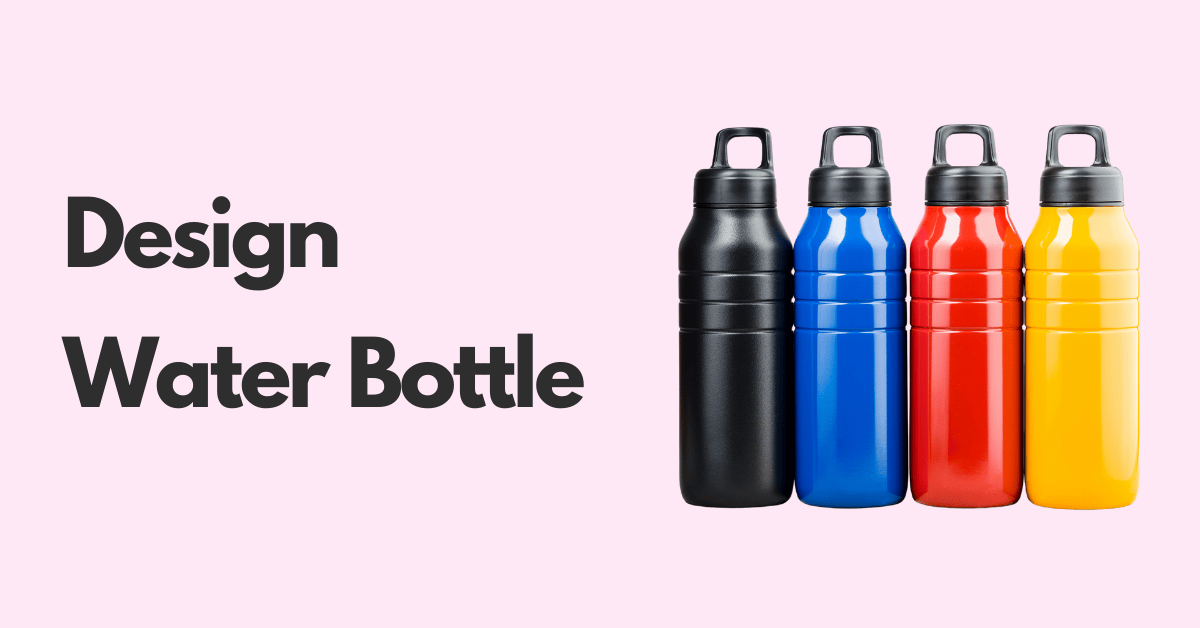
I'd like to approach this water bottle design challenge by first understanding the context and constraints, then developing a solution that addresses real user needs while creating business value. I'll explore user segments, identify pain points, prioritize solutions, and define success metrics to ensure we're building something truly impactful.
Does this approach sound good? I'd like to start by asking a few clarifying questions to ensure I'm addressing the right problem.
Step 1
Clarifying Questions (3 minutes)
- Why it matters: This affects how we approach brand consistency, manufacturing capabilities, and distribution channels.
- Expected answer: Could be either a new product line or extension of existing offerings.
- Impact on approach: If it's an existing brand, I'd need to align with their design language and values.
- Why it matters: Different use cases have vastly different requirements for durability, insulation, portability, etc.
- Expected answer: Likely a specific use case or multiple use cases to consider.
- Impact on approach: Would significantly influence material choices, size considerations, and feature prioritization.
- Why it matters: Sustainable materials and manufacturing processes might impact cost structure and marketing positioning.
- Expected answer: Sustainability is likely important but may need to be balanced with other factors.
- Impact on approach: Would influence material selection, packaging decisions, and potentially create a unique selling proposition.
- Why it matters: Price point affects material quality, feature set, and manufacturing approach.
- Expected answer: Likely a specific price range or market segment.
- Impact on approach: Would determine how much we can invest in materials, features, and manufacturing processes.
Propose the Goal
Given the increasing consumer focus on both functionality and sustainability in everyday products, I believe our goal should be to design a water bottle that addresses key user pain points while minimizing environmental impact. Does this align with your vision for this project?
Define the Scope
Based on our discussion, I'll focus on designing a water bottle for [specific use case] at a [specific price point], with particular attention to [sustainability/durability/other key factors]. I'll assume we're designing this for [company context] with [resource constraints].
Let me take a moment to organize my thoughts based on your feedback before moving forward.
For the remainder of this exercise, I'll assume we're designing a reusable water bottle for active urban professionals, with sustainability as a key consideration, at a mid-premium price point ($30-45 range).
Step 2
Why build this? (5 minutes)
Analyze Macro Trends and Opportunities:
The water bottle market is being shaped by several powerful trends:
-
Sustainability movement: Single-use plastic reduction initiatives are driving demand for reusable bottles. According to the Ellen MacArthur Foundation, by 2050, there could be more plastic than fish in the ocean by weight if current trends continue.
-
Health consciousness: Increased awareness about hydration's importance for overall health and wellness is driving demand for products that encourage regular water consumption.
-
Personalization: Consumers increasingly seek products that reflect their identity and lifestyle, with 36% of consumers expressing interest in personalized products according to Deloitte.
-
Smart technology integration: The growing IoT market presents opportunities for connected hydration tracking.
Competitor Analysis:
The water bottle market has several established players:
-
S'well: Premium positioning with stylish designs and excellent thermal properties, but at a high price point ($35-45).
-
Hydro Flask: Strong brand recognition among outdoor enthusiasts with durable construction and good insulation, though relatively heavy.
-
CamelBak: Leader in sports-focused bottles with specialized caps and drinking mechanisms, but designs can be utilitarian.
-
Nalgene: Known for durability and simplicity at affordable prices, but lacks premium features and aesthetic appeal.
-
Smart bottles (HidrateSpark, etc.): Offer hydration tracking but at very high price points ($60+) with mixed reliability.
Case studies worth noting:
- Hydro Flask's success came from focusing on outdoor enthusiasts first, then expanding to broader lifestyle positioning.
- S'well's partnership with Starbucks dramatically increased brand awareness and market penetration.
Value Chain Analysis:
In the water bottle industry, several areas remain problematic:
-
Materials sourcing: Many "sustainable" bottles still rely on resource-intensive materials or manufacturing processes.
-
User experience: Common pain points include leaking, difficult cleaning, and poor thermal performance.
-
End-of-life considerations: Most bottles aren't designed for easy recycling or component replacement.
A competitive advantage could be gained by addressing these gaps with innovative materials, thoughtful design for maintenance and repair, and a circular economy approach.
Step 3
User Segments (5 minutes)
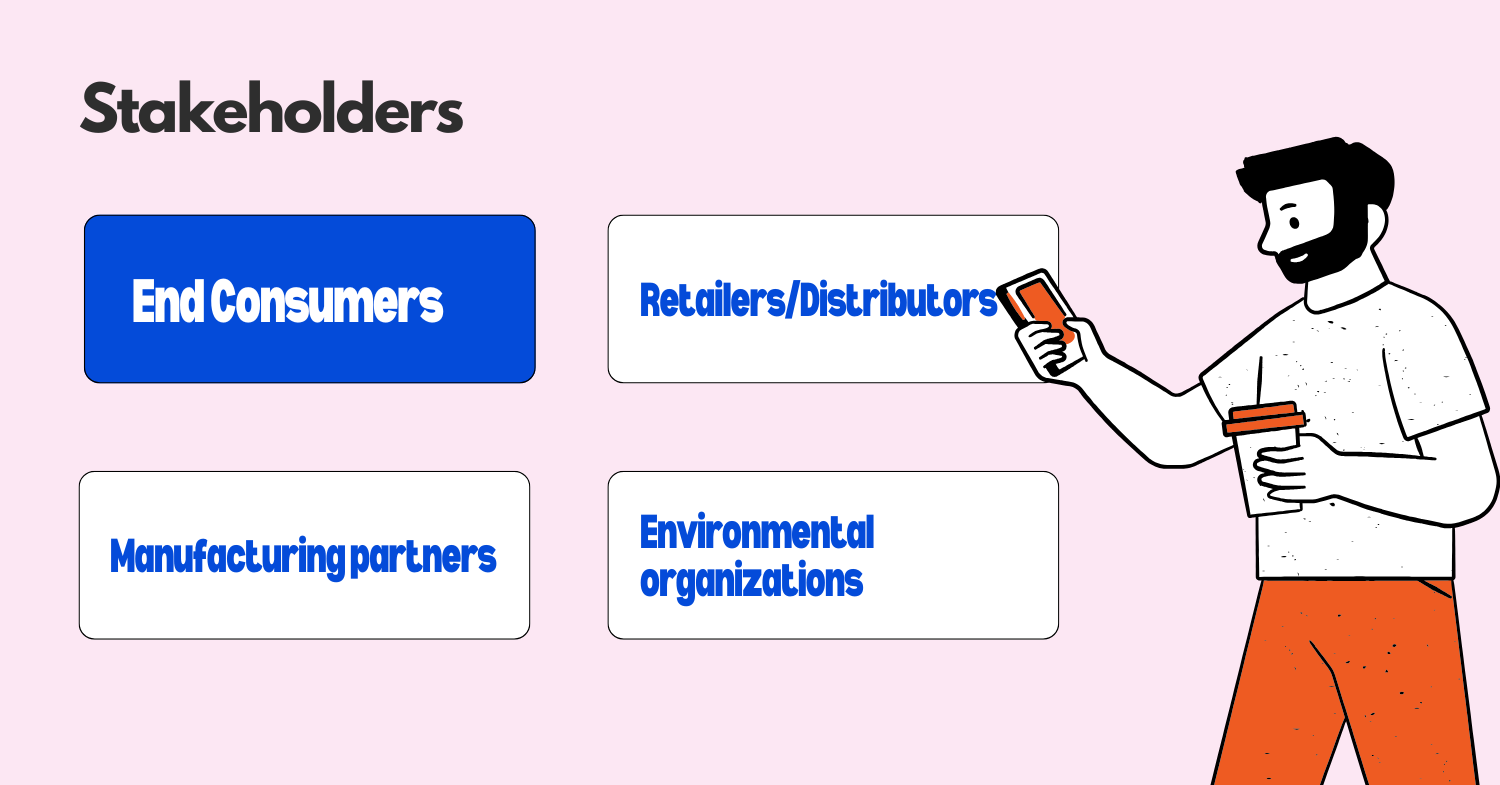 The key stakeholders in the water bottle ecosystem include:
- End consumers (various demographics)
- Retailers and distributors
- Manufacturing partners
- Environmental organizations
For this exercise, I'll focus on end consumers as our primary stakeholders, as they're the direct users of our product.
Within this group, I've identified several potential user segments:
-
Active Urban Professionals: 25-40 year-olds who commute to work, exercise regularly, and are environmentally conscious. They value both function and aesthetics.
-
Outdoor Enthusiasts: Hikers, campers, and adventure travelers who need extreme durability and reliability in various conditions.
-
Health-Focused Individuals: People actively tracking their water intake as part of health goals, often using apps or other digital tools.
-
Parents/Family Users: Looking for safe, durable options for themselves and their children, often juggling multiple bottles.
Let's prioritize these segments:
| Segment | TAM (1-10) | Frequency of Use (1-10) | Potential for Improvement (1-10) | Total Score |
|---|---|---|---|---|
| Active Urban Professionals | 8 | 9 | 8 | 576 |
| Outdoor Enthusiasts | 6 | 7 | 6 | 252 |
| Health-Focused Individuals | 7 | 9 | 9 | 567 |
| Parents/Family Users | 8 | 8 | 7 | 448 |
Scoring explanation:
- Active Urban Professionals: High TAM due to large urban populations, very high frequency as they use bottles daily for work and exercise, and significant improvement potential as current options often don't balance office aesthetics with gym functionality.
- Outdoor Enthusiasts: Smaller TAM, high but seasonal usage patterns, and moderate improvement potential as many specialized options already exist.
- Health-Focused Individuals: Good TAM that's growing with health trends, extremely high usage frequency, and very high improvement potential as few bottles effectively support hydration tracking.
- Parents/Family Users: Large TAM, high frequency, but moderate improvement potential as many family-oriented options exist.
Based on this analysis, I'll focus on Active Urban Professionals as our primary segment. They represent a large market with high usage frequency and significant unmet needs at the intersection of functionality, sustainability, and design.
Step 4
Pain Points (5 minutes)
For our Active Urban Professional segment, I've identified these key pain points:
-
Context Switching Challenges These users transition between multiple environments daily (home, commute, office, gym) with different requirements.
User quote: "I need a professional-looking bottle for client meetings, but also something that works at the gym. I end up carrying two different bottles or compromising."
Potential metrics: Number of different bottles owned, frequency of leaving bottles behind, satisfaction with bottle appearance in different contexts.
-
Maintenance Difficulties Cleaning and maintaining bottles is time-consuming for busy professionals, especially with complex components.
User quote: "I've stopped using my favorite bottle because mold started growing in the cap mechanism and I couldn't clean it properly."
Potential metrics: Time spent cleaning bottles weekly, frequency of replacing bottles due to cleanliness issues, bacterial testing results.
-
Inconsistent Temperature Control Existing bottles often fail to maintain desired temperatures throughout a busy day.
User quote: "My coffee is cold by mid-morning, and then I refill with water that gets warm by afternoon. I'm constantly disappointed."
Potential metrics: Temperature retention time, satisfaction with beverage temperature throughout day, frequency of not finishing drinks due to temperature issues.
-
Environmental Guilt vs. Convenience Users feel tension between sustainability values and the convenience of disposable options.
User quote: "I feel terrible buying plastic water bottles, but sometimes I forget my reusable one or it's dirty, so I end up buying disposable anyway."
Potential metrics: Number of disposable bottles purchased monthly, self-reported environmental guilt, frequency of not having reusable bottle when needed.
Mind map of pain points and their relationships:
                           ┌─────────────────────┐
                           │ Active Professional │
                           │    Water Bottle     │
                           │    Pain Points      │
                           └──────────┬──────────┘
                                      │
          ┌──────────────────────────┼──────────────────────────┐
          │                          │                          │
┌─────────▼─────────┐    ┌───────────▼───────────┐    ┌─────────▼─────────┐
│Context Switching  │    │    Maintenance        │    │   Temperature     │
│   Challenges      │    │    Difficulties       │    │     Control       │
└─────────┬─────────┘    └───────────┬───────────┘    └─────────┬─────────┘
          │                          │                          │
          │                          │                          │
┌─────────▼─────────┐    ┌───────────▼───────────┐    ┌─────────▼─────────┐
│ Aesthetic vs.     │    │ Time-consuming        │    │ Inconsistent      │
│ Functional        │    │ cleaning              │    │ performance       │
└───────────────────┘    └───────────────────────┘    └───────────────────┘
          │                          │                          │
          │                          │                          │
          └──────────────────────────┼──────────────────────────┘
                                     │
                           ┌─────────▼─────────┐
                           │Environmental Guilt│
                           │  vs. Convenience  │
                           └───────────────────┘
Step 5
Prioritization of Pain Points (3 minutes)
Let's prioritize these pain points based on severity and frequency:
| Pain Point | Severity (1-10) | Frequency (1-10) | Total Score |
|---|---|---|---|
| Context Switching Challenges | 8 | 9 | 72 |
| Maintenance Difficulties | 7 | 8 | 56 |
| Inconsistent Temperature Control | 6 | 9 | 54 |
| Environmental Guilt vs. Convenience | 7 | 7 | 49 |
Based on this analysis, I'll focus primarily on addressing Context Switching Challenges and secondarily on Maintenance Difficulties.
The Context Switching Challenges pain point scores highest because:
- It directly impacts daily usage across multiple environments
- It often leads to purchasing multiple products or compromising on needs
- It creates friction throughout the day for our target users
- Solving this effectively could create a truly differentiated product
Maintenance Difficulties ranks second because:
- It affects long-term product satisfaction and usage
- It has health implications (bacterial growth)
- It's a common reason for product abandonment
- It represents an opportunity for innovation in a neglected area
While temperature control is important, many premium bottles already address this reasonably well. Environmental concerns, while meaningful, can be addressed as part of our overall solution approach rather than as a standalone feature set.
Now that we've identified and prioritized the key pain points, I'll take a moment to organize my thoughts before presenting solution ideas.
Step 6
Solution (10 minutes)
Solution Ideas
-
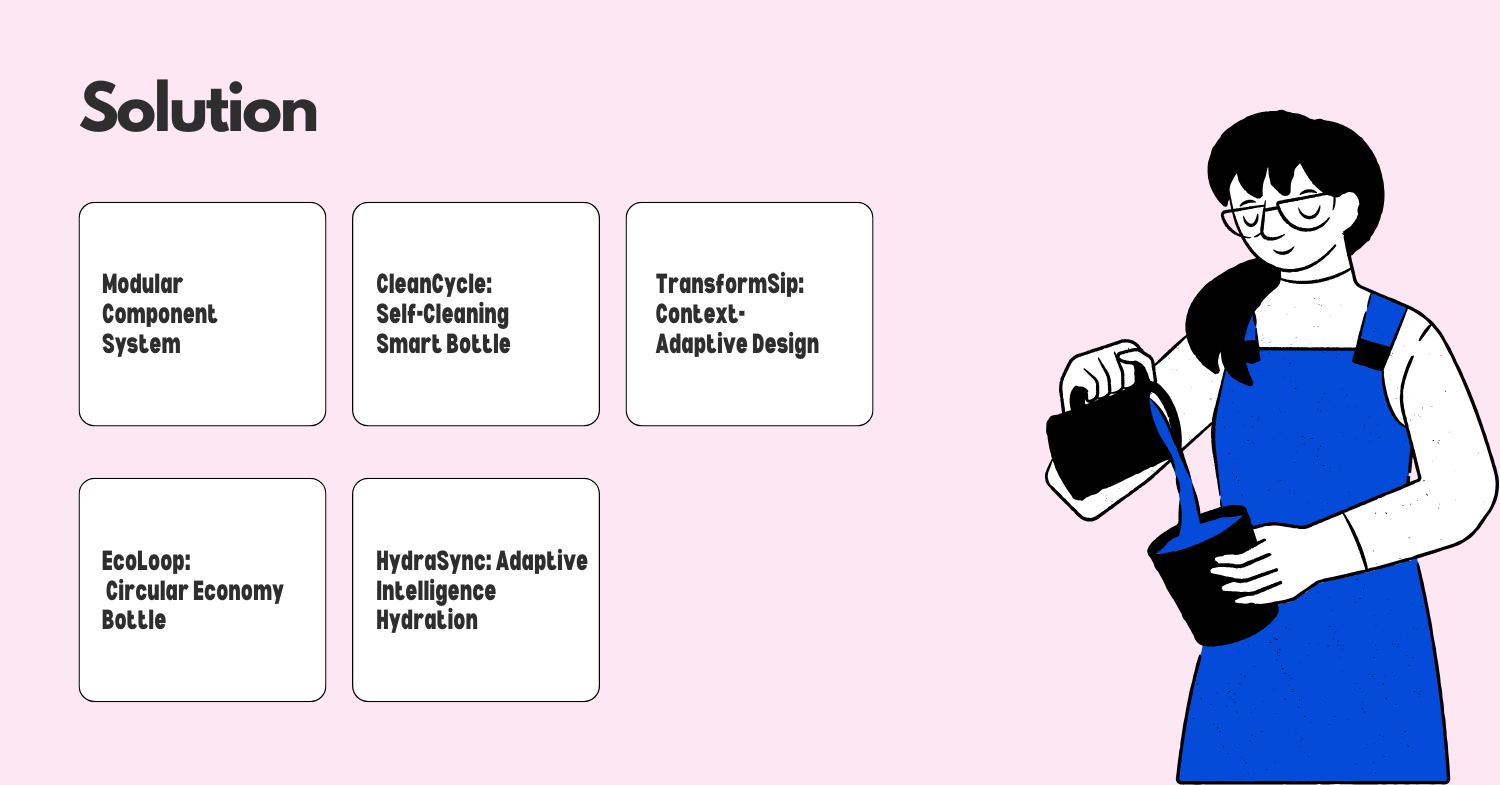
"ModBottle" - Modular Component System A water bottle with interchangeable components that adapt to different contexts. The core vessel remains the same, but users can swap between professional-looking outer shells, sport-focused grip elements, different cap types, and specialized drinking mechanisms. Components are designed for easy disassembly and cleaning, with dishwasher-safe parts. The modular approach extends product life by allowing replacement of individual components rather than the entire bottle.
-
"CleanCycle" - Self-Cleaning Smart Bottle A bottle with integrated UV-C light technology that automatically sanitizes the interior and cap at regular intervals. Features a simplified design with minimal crevices and a magnetic cap system that eliminates threading where bacteria typically accumulate. Includes a discreet indicator showing when cleaning is needed and when it's complete. The bottle syncs with a mobile app to track cleaning cycles and hydration.
-
"TransformSip" - Context-Adaptive Design A bottle with an elegant, minimalist exterior suitable for professional settings, but with hidden functionality for active use. Features include a concealed sport cap under a professional-looking magnetic lid, subtle grip texture that becomes more effective when wet, and a temperature-responsive exterior that changes properties based on the contents. Includes a simple indicator showing temperature status.
-
"EcoLoop" - Circular Economy Bottle A bottle designed from the ground up for sustainability and longevity. Made from recycled stainless steel with a plant-based polymer protective coating. Features a completely modular design where every component can be replaced, recycled, or composted. Includes a take-back program where worn components can be returned for recycling and discounts on replacements. The minimalist design works across contexts.
-
"Moonshot: HydraSync" - Adaptive Intelligence Hydration A revolutionary bottle that adapts to the user's hydration needs throughout the day. Using embedded sensors, it monitors environmental conditions, activity levels via smartphone integration, and drinking patterns to customize reminders and even adjust flavor (via optional flavor pods). The exterior uses e-ink technology to change appearance based on context - subtle patterns for work, motivational messages during workouts. The entire system is designed for easy maintenance with self-cleaning nanotechnology.
Solution Prioritization
| Solution | Reach (1-10) | Impact (1-10) | Confidence (1-10) | Effort (1-10) | Score (R×I×C/E) |
|---|---|---|---|---|---|
| ModBottle | 8 | 9 | 8 | 7 | 8.2 |
| CleanCycle | 7 | 8 | 7 | 8 | 4.9 |
| TransformSip | 8 | 7 | 8 | 6 | 7.5 |
| EcoLoop | 7 | 7 | 8 | 7 | 5.6 |
| HydraSync | 9 | 10 | 5 | 10 | 4.5 |
Scoring explanation:
- ModBottle: High reach due to versatility across contexts, high impact by directly addressing primary pain points, good confidence based on existing modular products in other categories, moderate effort for designing interconnecting components.
- CleanCycle: Good reach but limited by technology adoption, good impact on maintenance issues, moderate confidence due to technical complexity, high effort for technology integration.
- TransformSip: High reach with broad appeal, good impact on context switching, high confidence with mostly proven technologies, moderate effort for design integration.
- EcoLoop: Moderate reach limited by sustainability-focused consumers, moderate impact addressing secondary concerns, high confidence with established materials, moderate effort for supply chain development.
- HydraSync: Very high reach and impact as a revolutionary product, but low confidence due to technical complexity and high effort requirement.
Based on this analysis, I'll focus on the ModBottle solution as our primary concept.
User Flow for ModBottle
User Journey Emotional States
| Touchpoint | Emotional State | Description |
|---|---|---|
| Purchase | Excited/Hopeful | User is optimistic about solving multiple pain points |
| Morning Assembly | Satisfied | Quick, intuitive component selection |
| Office Use | Confident | Professional appearance matches environment |
| Component Swap | Relieved | Easy transition between contexts |
| Workout Use | Energized | Functionality supports activity |
| Cleaning | Content | Simple disassembly and dishwasher-safe components |
Implementation Challenges
-
Manufacturing Complexity: Creating components that are both interchangeable and leak-proof will require precise engineering and quality control. We'll need to invest in advanced manufacturing processes and rigorous testing protocols.
-
Inventory Management: Offering multiple components creates inventory complexity for both us and retailers. We'll need to develop smart bundling strategies and potentially explore direct-to-consumer channels.
-
User Education: The modular concept, while intuitive once understood, requires initial education. We'll need clear instructions, possibly video tutorials, and intuitive design cues to help users understand the system quickly.
Step 7
Success Metrics (5 minutes)
User Metrics
-
Context Adaptation Rate
- Definition: Percentage of users who regularly use different configurations for different contexts
- Target: 70% of users use at least 2 different configurations weekly
- Why it matters: Directly measures if we're solving the context switching pain point
-
Cleaning Compliance
- Definition: Frequency of proper cleaning (disassembly and thorough cleaning)
- Target: Average user cleans bottle components 2+ times per week
- Why it matters: Addresses maintenance pain point and indicates ease of cleaning
-
Retention Rate
- Definition: Percentage of users still regularly using the bottle after 6 months
- Target: 80% retention at 6 months (industry average is approximately 60%)
- Why it matters: Indicates long-term satisfaction and product-market fit
Product Metrics
-
Component Attachment Rate
- Definition: Average number of additional components purchased per user
- Target: 2+ additional components within first 3 months
- Why it matters: Indicates engagement with the modular system and revenue potential
-
Net Promoter Score
- Definition: Likelihood of recommending product to others
- Target: NPS of 40+ (premium consumer products average 30-40)
- Why it matters: Measures overall satisfaction and potential for organic growth
-
Defect Rate
- Definition: Percentage of products reported to have leaks or component failures
- Target: <2% defect rate
- Why it matters: Critical for maintaining trust in a modular system where connections are potential failure points
Leading Indicators
-
Initial Configuration Time
- Definition: Time taken for new users to assemble their first configuration
- Target: <60 seconds without instructions
- Why it matters: Early indicator of intuitive design and potential adoption issues
-
Social Media Sharing
- Definition: Frequency of users sharing their bottle configurations on social media
- Target: 5% of users share within first month
- Why it matters: Indicates pride in product and potential for organic marketing
Summary
I've approached the water bottle design challenge by focusing on active urban professionals who struggle with context switching between professional and active environments throughout their day. Their key pain points include managing different usage contexts, maintaining cleanliness, and balancing environmental values with convenience.
The ModBottle solution addresses these challenges through a modular system that allows users to adapt a single core vessel to different environments by swapping components. This approach solves the context switching problem while making maintenance easier through dishwasher-safe, easily disassembled components.
The solution aligns with sustainability trends by extending product life through component replacement rather than whole product replacement. It also creates an engaging ecosystem that encourages continued engagement and additional purchases.
Success will be measured through context adaptation rates, cleaning compliance, component attachment rates, and overall retention and satisfaction metrics.
Next steps would include:
- Creating detailed component specifications and engineering requirements
- Developing prototypes for user testing
- Conducting durability and leak testing
- Exploring manufacturing partnerships and sustainable material options
.png)