Introduction
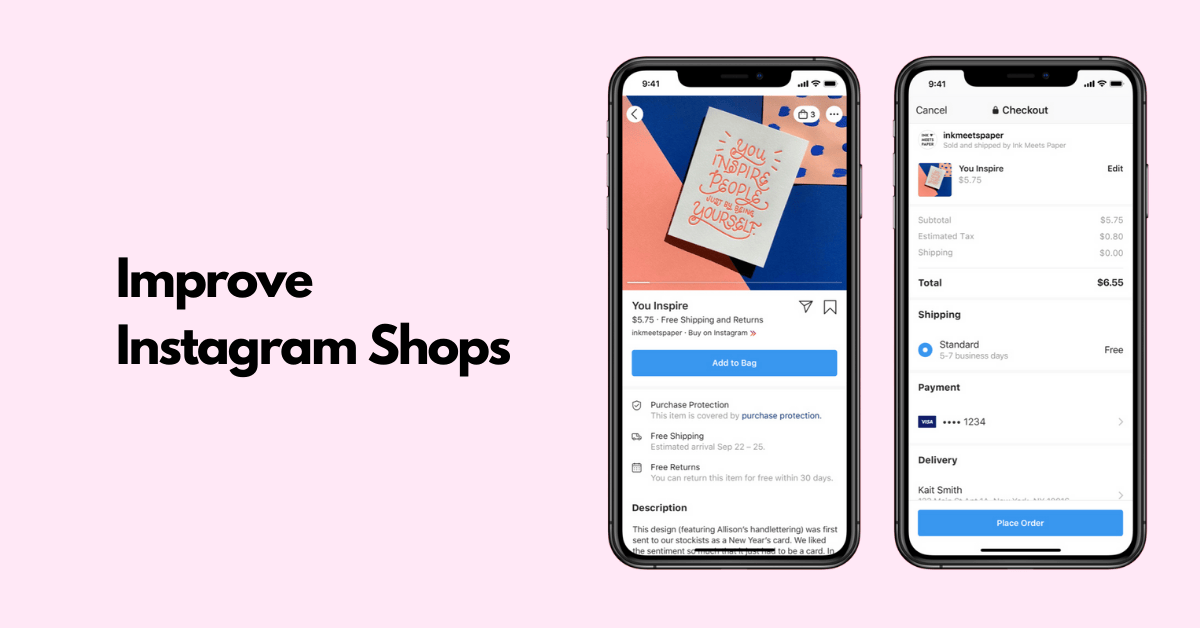
Instagram Shopping has evolved from a simple photo-sharing feature to a significant e-commerce platform within the Instagram ecosystem. To improve Instagram Shopping, I'll analyze the current state, identify key pain points, and propose strategic solutions that enhance the shopping experience while driving business value. I'll focus on understanding user needs, optimizing the purchase journey, and creating a more seamless integration between content discovery and commerce.
Step 1
Clarifying Questions
- Why it matters: This helps me understand if we're solving for conversion rates, discovery issues, merchant adoption, or user engagement.
- Expected answer: Conversion rates are lower than expected, and cart abandonment is high.
- Impact on approach: Would focus on streamlining the purchase flow versus expanding discovery features.
- Why it matters: Determines whether we optimize for GMV, user engagement, merchant acquisition, or ad revenue.
- Expected answer: Instagram Shopping is a key growth driver for Meta's commerce initiatives, with goals to increase platform stickiness and diversify revenue streams.
- Impact on approach: Would align solutions with broader strategic objectives rather than isolated feature improvements.
- Why it matters: Helps identify competitive advantages we can leverage or gaps we need to address.
- Expected answer: Users browse more on Instagram but convert at higher rates on dedicated e-commerce platforms.
- Impact on approach: Would focus on reducing friction between discovery and purchase.
- Why it matters: Technical constraints could limit certain solution approaches or highlight opportunities for improvement.
- Expected answer: API limitations create inventory sync issues and checkout friction for merchants.
- Impact on approach: Would prioritize technical infrastructure improvements alongside user experience enhancements.
I'd like to take a minute to organize my thoughts before diving into user segmentation.
Step 2
User Segmentation
Key Stakeholders
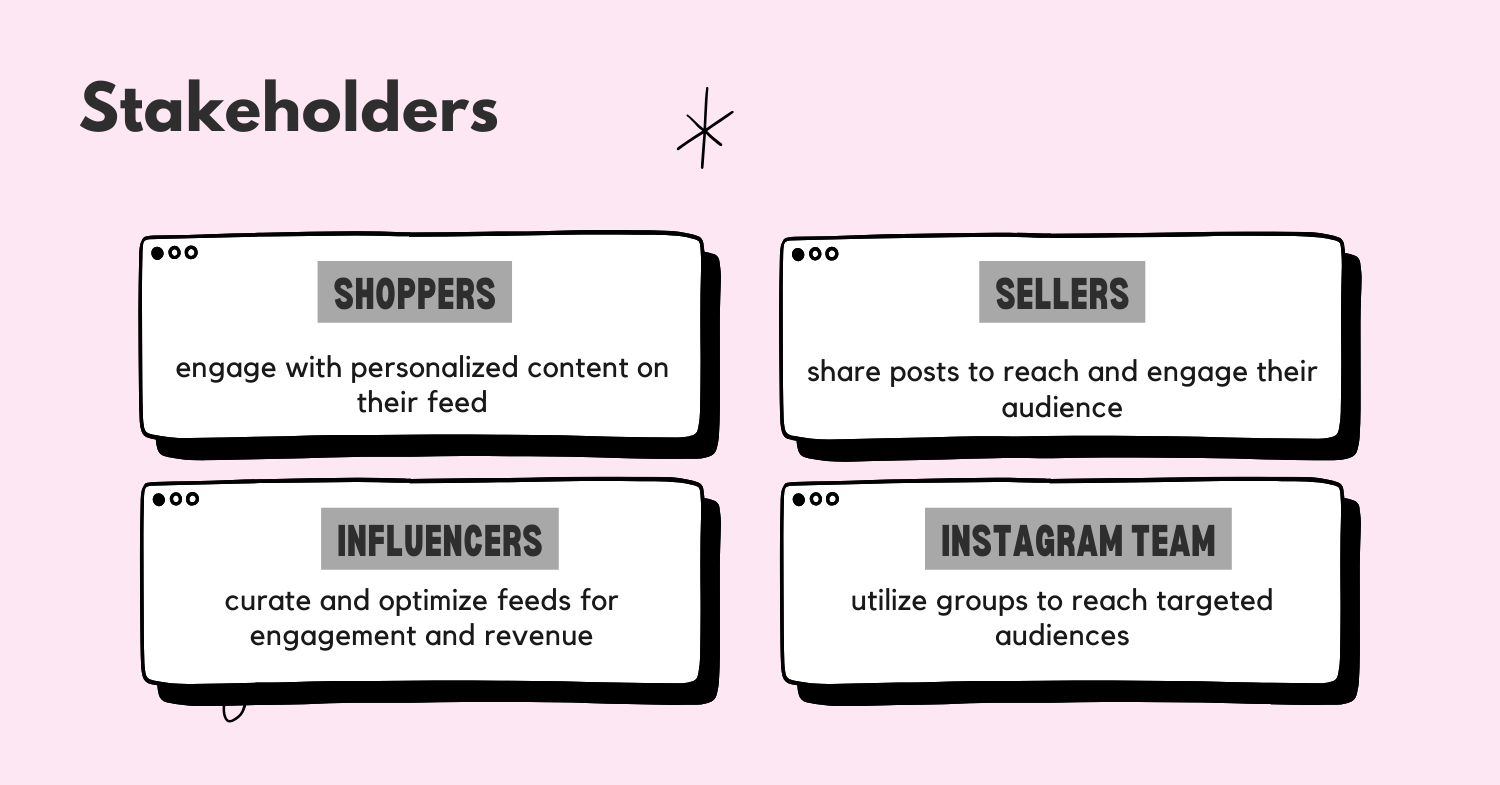
In the Instagram Shopping ecosystem, there are three primary stakeholders:
- Shoppers - Instagram users who discover and purchase products
- Merchants - Businesses selling products through Instagram Shopping
- Content Creators - Influencers who promote products and drive discovery
For this analysis, I'll focus on Shoppers as the primary stakeholder since improving their experience will directly impact conversion rates and satisfaction, which ultimately benefits merchants and creators as well.
Sub-segments
Within the Shoppers segment, I can identify several behavioral sub-segments:
- Inspiration Browsers - Users who primarily use Instagram for content consumption but occasionally discover products they want to purchase
- Intentional Shoppers - Users who actively use Instagram to find specific products or browse categories with purchase intent
- Social Followers - Users who primarily purchase products recommended by creators or friends they follow
- Deal Seekers - Users who engage with shopping primarily when discovering promotions or exclusive offers
Prioritization Table
| Sub-Segment | TAM (1-10) | Frequency (1-10) | Potential Value (1-10) | Total Score | Explanation |
|---|---|---|---|---|---|
| Inspiration Browsers | 9 | 8 | 7 | 504 | Largest segment with high browsing frequency but moderate conversion intent |
| Intentional Shoppers | 7 | 9 | 10 | 630 | High purchase intent and frequency, though smaller overall population |
| Social Followers | 8 | 7 | 8 | 448 | Good size and value, but dependent on creator content |
| Deal Seekers | 6 | 5 | 6 | 180 | Smaller segment with lower frequency and primarily price-driven |
Based on this analysis, I'll focus on Intentional Shoppers as they represent the highest potential value due to their explicit shopping intent and high engagement frequency.
Primary Persona: The Intentional Shopper
Name: Maya, 28 Demographics: Urban professional, $75K+ income, tech-savvy Behaviors:
- Spends 45+ minutes daily on Instagram
- Follows specific brands and product categories
- Uses Instagram to research products before purchasing
- Has made 5+ purchases through Instagram in the past 3 months
- Often saves products to collections for later consideration
Motivations:
- Discovering new products aligned with her aesthetic and interests
- Efficiently researching product details and comparing options
- Seamless purchasing experience without platform switching
- Building trust through reviews and social proof
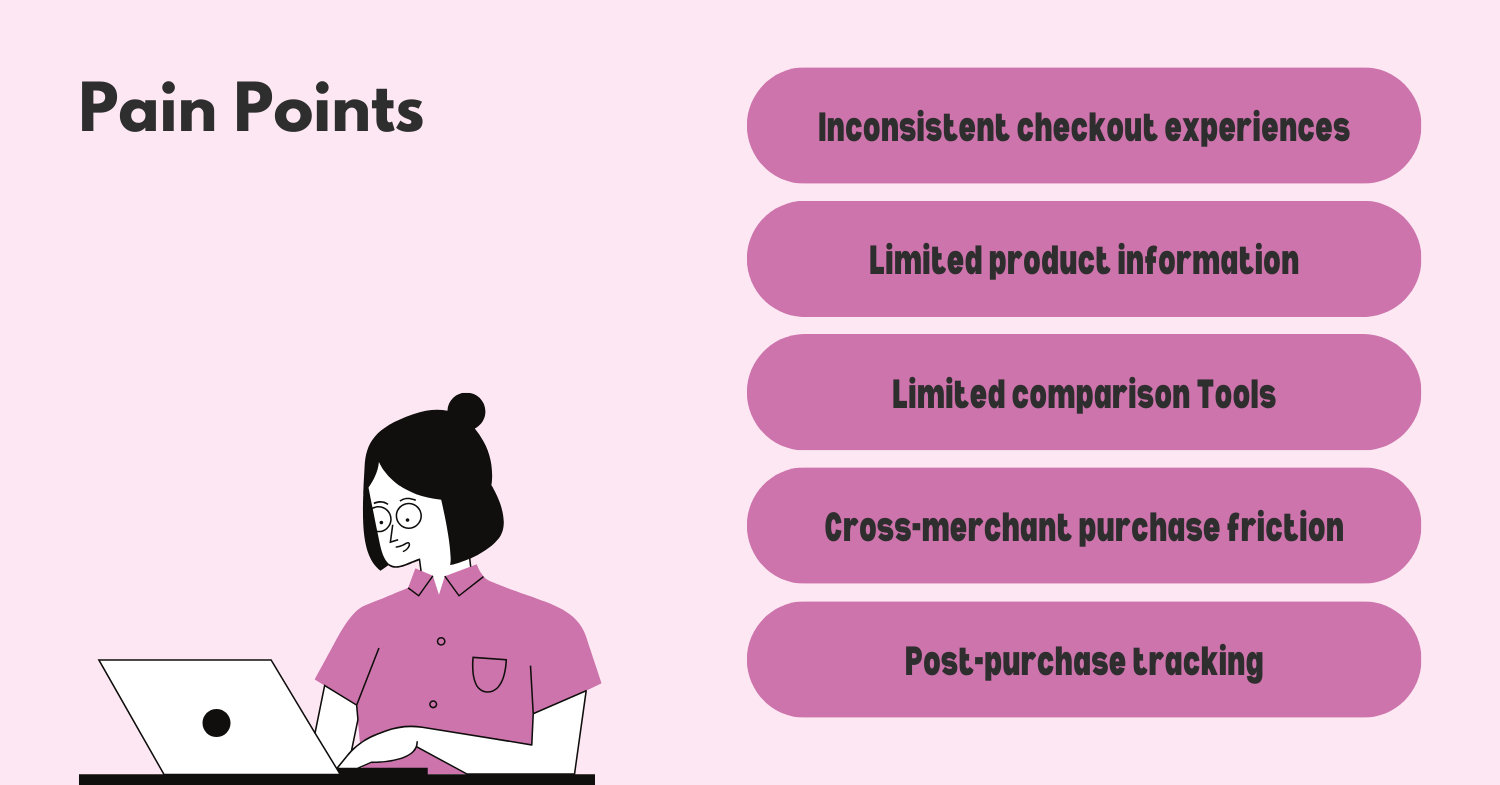
Pain Points:
- Difficulty comparing similar products across different merchants
- Limited product information compared to dedicated e-commerce sites
- Inconsistent checkout experiences depending on the merchant
- Challenges tracking orders or managing returns
- Uncertainty about product authenticity and quality
Step 3
Pain Points Analysis
User Journey for Intentional Shoppers
- Discovery - Finding products through search, explore page, or followed accounts
- Consideration - Reviewing product details, images, and pricing
- Validation - Reading reviews, checking authenticity, comparing alternatives
- Purchase Decision - Adding to cart and proceeding to checkout
- Checkout - Entering payment and shipping information
- Post-Purchase - Order tracking, customer service, and returns
Pain Points at Each Stage
Discovery Pain Points
- Limited search functionality: "I can search for brands but not specific product attributes like 'waterproof hiking boots under $100'"
- Inconsistent product tagging: "Sometimes I see a product I like in a post but it's not tagged or shoppable"
- Algorithm limitations: "After I look at one product, my feed gets overwhelmed with similar items"
Consideration Pain Points
- Incomplete product information: "I often have to leave Instagram to find detailed specs or dimensions"
- Limited product imagery: "Some products only have 1-2 images compared to 5-10 on dedicated e-commerce sites"
- Inconsistent size information: "Size charts are often missing or inconsistent across merchants"
Validation Pain Points
- Scattered reviews: "Reviews aren't centralized or easily accessible within the shopping experience"
- Difficult comparison: "I can't easily compare similar products side by side"
- Limited social proof: "It's hard to see if friends or trusted creators have purchased or recommended this product"
Purchase Decision Pain Points
- Cart management limitations: "I can't easily save items for later or move between wishlist and cart"
- Cross-merchant purchase friction: "I have to check out separately for each merchant"
- Limited promotion integration: "I found a promo code but couldn't apply it within Instagram checkout"
Checkout Pain Points
- Inconsistent checkout experiences: "Sometimes I checkout in Instagram, sometimes I'm sent to a website"
- Payment method limitations: "Not all my preferred payment methods are available"
- Address management: "I have to re-enter my shipping information for different merchants"
Post-Purchase Pain Points
- Limited order tracking: "I have to leave Instagram to track my package"
- Fragmented customer service: "When I have an issue, it's unclear if I should contact the merchant or Instagram"
- Return process complexity: "Returns are handled differently by each merchant with no standardized process"
Pain Point Prioritization
| Pain Point | Severity (1-10) | Frequency (1-10) | Total Score | Explanation |
|---|---|---|---|---|
| Inconsistent checkout experiences | 9 | 10 | 90 | Directly impacts conversion at critical moment |
| Limited product information | 8 | 10 | 80 | Creates uncertainty and drives users off-platform |
| Difficult product comparison | 7 | 9 | 63 | Extends decision process and reduces conversion |
| Cross-merchant purchase friction | 8 | 7 | 56 | Significantly reduces multi-item purchases |
| Limited order tracking | 6 | 8 | 48 | Affects post-purchase satisfaction and return rate |
Critical Pain Points to Address
-
Inconsistent checkout experiences - The jarring transition between in-app and external checkout creates significant drop-off and reduces trust in the platform.
-
Limited product information - Insufficient details force users to leave Instagram to research products, often resulting in abandoned purchases.
-
Difficult product comparison - The inability to compare similar products extends the decision-making process and frequently leads users to traditional e-commerce sites.
-
Cross-merchant purchase friction - Having to complete separate transactions for different merchants significantly reduces the likelihood of multi-item purchases.
These pain points have likely increased in severity as user expectations have evolved. E-commerce platforms like Amazon and dedicated shopping apps have raised the bar for seamless shopping experiences, making Instagram Shopping's limitations more apparent. Additionally, as social commerce has grown more competitive with TikTok Shop's entry, these friction points have become more problematic for user retention.
Now that we've identified the key pain points, let's take a brief moment to organize our thoughts before developing solutions.
Step 4
Solution Generation
Based on the identified pain points, I'll develop solutions that create a more seamless, informative, and cohesive shopping experience for Intentional Shoppers on Instagram.
Solution 1: Universal Checkout Experience
Description: Create a unified checkout system that allows users to purchase products from multiple merchants in a single transaction while maintaining a consistent in-app experience.
Key Components:
- Universal Shopping Cart: Allow users to add products from multiple merchants to a single cart
- Standardized Checkout Flow: Create a consistent, Instagram-native checkout experience regardless of merchant
- Payment Profile Management: Enable users to save and manage payment methods and shipping addresses within Instagram
- Order Bundling: Optimize shipping by intelligently bundling items from the same or nearby merchants
- Post-Purchase Management: Provide a unified order tracking and management interface within Instagram
User Flow:
- User adds products from multiple merchants to their cart
- User proceeds to checkout and sees all items organized by merchant
- User selects saved payment method and shipping address (or enters new ones)
- Instagram processes payment and distributes funds to respective merchants
- User receives confirmation and can track all orders from a single interface
Technical Challenges:
- Integration with diverse merchant inventory and order management systems
- Payment processing and fund distribution across multiple merchants
- Reconciling different shipping policies and costs
- Managing returns and customer service responsibilities
Business Challenges:
- Convincing merchants to adopt the unified system
- Determining fee structures that are competitive with direct sales
- Managing customer service boundaries between Instagram and merchants
Solution 2: Enhanced Product Information Architecture
Description: Develop a comprehensive product information system that provides users with all necessary details without leaving the app, while maintaining a visually appealing and consistent presentation.
Key Components:
- Standardized Product Detail Templates: Create consistent templates that merchants must populate with comprehensive information
- Rich Media Integration: Support 360° product views, video demonstrations, and multiple high-quality images
- Specification Comparison: Allow users to view detailed specifications in a standardized format
- Expanded AR Try-On: Extend AR capabilities beyond cosmetics and eyewear to clothing, home decor, and other categories
- User-Generated Content Integration: Incorporate customer photos and videos showing the product in real use
User Flow:
- User discovers a product and taps to view details
- User sees a comprehensive product page with standardized sections
- User can swipe through rich media, view specifications, and see the product in AR
- User can view how others are using the product through integrated UGC
- User makes an informed decision without leaving Instagram
Technical Challenges:
- Creating flexible yet standardized templates for diverse product categories
- Developing AR capabilities for various product types
- Managing and moderating user-generated content
- Ensuring fast loading times despite rich media content
Business Challenges:
- Getting merchants to provide complete and standardized product information
- Balancing comprehensive information with Instagram's visual-first experience
- Maintaining brand identity within standardized templates
Solution 3: Comparative Shopping Tools
Description: Develop features that allow users to easily compare products across different merchants, save options for later consideration, and make informed purchase decisions.
Key Components:
- Side-by-Side Comparison: Allow users to select multiple products to compare specifications, prices, and reviews
- Smart Collections: Enable users to create and organize product collections with notes and preferences
- Advanced Filtering: Implement category-specific filters for price, features, ratings, and other attributes
- Similar Item Suggestions: Automatically suggest comparable products when viewing an item
- Price Drop Alerts: Notify users when saved items go on sale
User Flow:
- User discovers multiple products of interest
- User adds products to a comparison list or collection
- User views products side-by-side with key differences highlighted
- User filters and sorts based on specific attributes
- User makes a selection based on comprehensive comparison
Technical Challenges:
- Creating a flexible comparison system that works across product categories
- Developing algorithms to identify truly comparable products
- Building an intuitive interface for complex comparison features
- Implementing real-time price monitoring
Business Challenges:
- Ensuring fair comparison that doesn't disadvantage certain merchants
- Balancing comparison features with the goal of driving conversions
- Managing merchant concerns about direct competition
Solution 4: Integrated Post-Purchase Experience
Description: Create a comprehensive post-purchase system within Instagram that handles order tracking, customer service, returns, and reordering.
Key Components:
- Universal Order Tracking: Integrate with shipping carriers to provide real-time tracking within Instagram
- Centralized Customer Service: Create a messaging system that connects users directly with merchant support while maintaining conversation history
- Standardized Return Process: Implement a consistent return flow regardless of merchant
- Purchase History and Reordering: Allow users to easily view past purchases and reorder items
- Review Solicitation: Prompt users to review products after delivery
User Flow:
- User completes purchase and receives confirmation
- User can track package status directly within Instagram
- If issues arise, user can initiate support conversations from the order
- User can initiate returns through a standardized process
- After delivery, user is prompted to review the product
- User can easily reorder items from purchase history
Technical Challenges:
- Integration with diverse shipping carriers and tracking systems
- Creating a customer service platform that connects to merchant systems
- Standardizing return processes across different merchant policies
- Managing review authenticity and moderation
Business Challenges:
- Defining responsibility boundaries between Instagram and merchants
- Managing customer expectations for service and returns
- Encouraging merchant adoption of standardized processes
Moonshot Idea: Instagram Shopping Membership Program
Description: Create a premium shopping membership program similar to Amazon Prime that offers free shipping, exclusive products, early access to drops, and special promotions across participating merchants.
Key Components:
- Free Expedited Shipping: Offer free 2-day shipping across all participating merchants
- Exclusive Products and Drops: Provide early or exclusive access to new product releases
- Rewards Program: Implement a points system for purchases that can be redeemed across merchants
- Premium Customer Service: Offer priority support and hassle-free returns
- Content Creator Collaborations: Exclusive access to limited edition creator collaborations
This moonshot idea would transform Instagram Shopping from a feature to a destination shopping platform, creating a powerful ecosystem that drives loyalty and increases purchase frequency while providing significant value to merchants through higher conversion rates and average order values.
Step 5
Solution Evaluation and Prioritization
Let's evaluate our proposed solutions using the RICE framework (Reach, Impact, Confidence, Effort) to determine implementation priorities.
RICE Analysis
| Solution | Reach (1-10) | Impact (1-10) | Confidence (0-100%) | Effort (Person-Months) | RICE Score | Explanation |
|---|---|---|---|---|---|---|
| Universal Checkout Experience | 9 | 10 | 80% | 15 | 48 | Directly addresses highest priority pain point; affects all transactions but requires significant development effort |
| Enhanced Product Information | 10 | 8 | 90% | 8 | 90 | Reaches all users browsing products with high impact on decision-making; relatively straightforward to implement |
| Comparative Shopping Tools | 7 | 7 | 70% | 10 | 34.3 | Valuable for comparison shoppers but not all users; moderate technical complexity |
| Integrated Post-Purchase Experience | 8 | 7 | 80% | 12 | 37.3 | Affects all purchasers but only after conversion; requires significant integration work |
RICE Score = (Reach × Impact × Confidence) ÷ Effort
Implementation Roadmap
Based on the RICE analysis and strategic considerations, I recommend the following implementation roadmap:
Phase 1 (0-3 months): Enhanced Product Information
- Standardized product detail templates
- Rich media integration requirements
- Basic specification standardization
- This provides quick wins with relatively low effort and addresses a critical pain point
Phase 2 (3-6 months): Universal Checkout Experience (Part 1)
- Unified shopping cart
- Standardized checkout flow
- Payment profile management
- This addresses the highest priority pain point with initial functionality
Phase 3 (6-9 months): Integrated Post-Purchase Experience
- Universal order tracking
- Centralized customer service
- Purchase history and reordering
- Completes the end-to-end experience for users who convert in earlier phases
Phase 4 (9-12 months): Universal Checkout Experience (Part 2)
- Order bundling
- Cross-merchant promotions
- Enhanced payment options
- Builds on the initial checkout improvements with more advanced features
Phase 5 (12-15 months): Comparative Shopping Tools
- Side-by-side comparison
- Smart collections
- Advanced filtering
- Enhances discovery and consideration once the basic purchase flow is optimized
Future Consideration (15+ months): Shopping Membership Program
- Begin with pilot program for select merchants and users
- Expand based on performance data
This roadmap prioritizes addressing the most critical pain points first while considering implementation complexity and dependencies between solutions.
Step 6
Metrics and Measurement
To measure the success of our Instagram Shopping improvements, I'll establish primary, secondary, and guardrail metrics.
Primary Metrics
-
Conversion Rate: Percentage of product views that result in purchases
- Target: 20% improvement in first 6 months
- Rationale: Directly measures our ability to reduce friction in the purchase journey
-
Average Order Value (AOV): Average dollar amount spent per transaction
- Target: 15% increase within 6 months
- Rationale: Indicates success of cross-merchant purchasing and product comparison features
-
Shopping Session Duration: Time spent engaging with shopping features
- Target: 25% increase within 3 months
- Rationale: Measures engagement with enhanced product information and comparison tools
Secondary Metrics
-
Cart Abandonment Rate: Percentage of items added to cart but not purchased
- Target: 30% reduction within 6 months
- Rationale: Directly measures checkout experience improvements
-
Return Rate: Percentage of purchased items that are returned
- Target: 20% reduction within 9 months
- Rationale: Indicates better product information leading to more informed purchases
-
Repeat Purchase Rate: Percentage of shoppers who make additional purchases within 90 days
- Target: 25% increase within 12 months
- Rationale: Measures overall satisfaction with the shopping experience
Guardrail Metrics
-
Overall App Engagement: Ensure shopping improvements don't negatively impact core social engagement
- Threshold: No more than 5% decrease in non-shopping engagement
- Rationale: Preserves Instagram's primary social value proposition
-
Merchant Adoption Rate: Percentage of eligible merchants implementing new features
- Threshold: Minimum 70% adoption within 6 months of feature release
- Rationale: Ensures sufficient scale for features to deliver user value
-
User Satisfaction: Measured through surveys and feedback
- Threshold: Minimum 4.0/5.0 satisfaction rating for shopping features
- Rationale: Ensures quantitative improvements don't come at the expense of qualitative experience
I would establish a measurement framework that tracks these metrics weekly, with formal reviews monthly and quarterly. For major feature launches, we would implement A/B testing where possible to isolate the impact of specific changes before full rollout.
Step 7
Summary
To improve Instagram Shopping, I've focused on addressing key pain points for Intentional Shoppers, our highest-value user segment. My analysis identified four critical issues: inconsistent checkout experiences, limited product information, difficult product comparison, and cross-merchant purchase friction.
My proposed solution strategy addresses these issues through four interconnected initiatives:
- Enhanced Product Information Architecture - Creating standardized, comprehensive product details to keep users in-app throughout their decision journey
- Universal Checkout Experience - Developing a unified cart and checkout system that works seamlessly across merchants
- Integrated Post-Purchase Experience - Building a cohesive system for order tracking, customer service, and returns
- Comparative Shopping Tools - Implementing features that facilitate informed purchase decisions
The implementation roadmap prioritizes Enhanced Product Information first as it offers the highest RICE score with relatively quick implementation, followed by the Universal Checkout Experience to address our most critical pain point.
Success will be measured primarily through conversion rate, average order value, and shopping session duration, with guardrails to ensure we maintain overall app engagement and merchant satisfaction.
Next Steps
- Validate with User Research: Conduct targeted research with Intentional Shoppers to validate pain points and test solution concepts
- Merchant Consultation: Engage key merchants to gather feedback on proposed changes and implementation requirements
- Technical Assessment: Complete detailed technical scoping for Enhanced Product Information to confirm effort estimates
- Pilot Program Design: Develop a pilot program structure for initial features with select merchants and users
- Success Metrics Baseline: Establish current baseline for all identified metrics to enable accurate measurement of improvements
This approach balances user needs, technical feasibility, and business objectives to transform Instagram Shopping from a feature into a comprehensive commerce platform that seamlessly blends discovery and purchase.
.png)